

Note: At the time of publishing this, citizens of the world’s largest and loudest democracy are protesting for their electoral rights. For both their right to vote and their vote registering accurately. In 2026, yes.
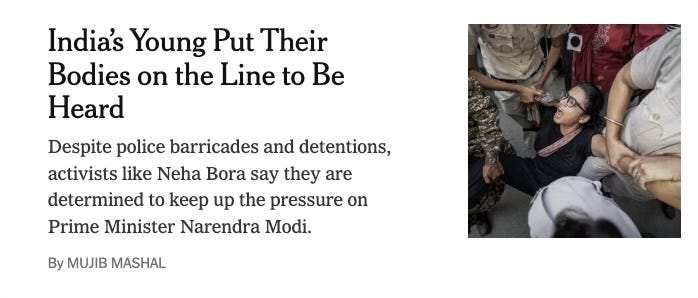
This is the second major protest in three months. And the police in the national capital has responded the only way it knows: through detentions, violence, and complete oppression of basic human rights. Journalists, lawyers, priests, students—they haven’t spared anybody. The resources that could’ve been deployed to make Delhi a safer city for women were used, once again, to stifle the voice of the disenfranchised. Yesterday was another lesson on how compromised India’s binding foundations are right now.
But, by the same token, there’s tremendous hope to be derived from the courage of the protestors. Despite the Home Ministry turning the capital into a war zone, locked down and teeming with police vans, they turned up. They were detained, thrown like sandbags into buses, dropped off in desolate corners, and they returned and continued from another spot. When the Bharatiya Janata Party (BJP) castle crumbles, and it inevitably will, the decisive push will have come from the common person who braves state-sanctioned violence on the streets of the capital.
In this atmosphere, sports matters very little. Until last evening, I wasn’t sure if this should be published. But it lay written in my drafts, and I have generally maintained a no-limbo-drafts policy here. Now that it’s out, if it can provide somebody five minutes of respite from an air of despair about the world, it will be job done.
If you really think about it, there’s been no other life like Lionel Messi for Argentina. Greatness, generally, finds a way to its true reward. Ali, Kobe, Nadal, Federer, and Graf had their first titles within five years of starting. Jordan took seven and Maradona ten, but they were young men still, 28 and 26, with brilliance yet to spend. Messi had to wait sixteen years to win a major international title, seventeen for a World Cup—the only accepted peak for a player of his Himalayan abilities—while he piled up cupboards of collective and individual awards for FC Barcelona, where he had moved from Rosario when he was thirteen.
That life ended this week at the Estadio Monumental in Buenos Aires. Argentina’s friendly against Benin was Messi’s last match as an international footballer.
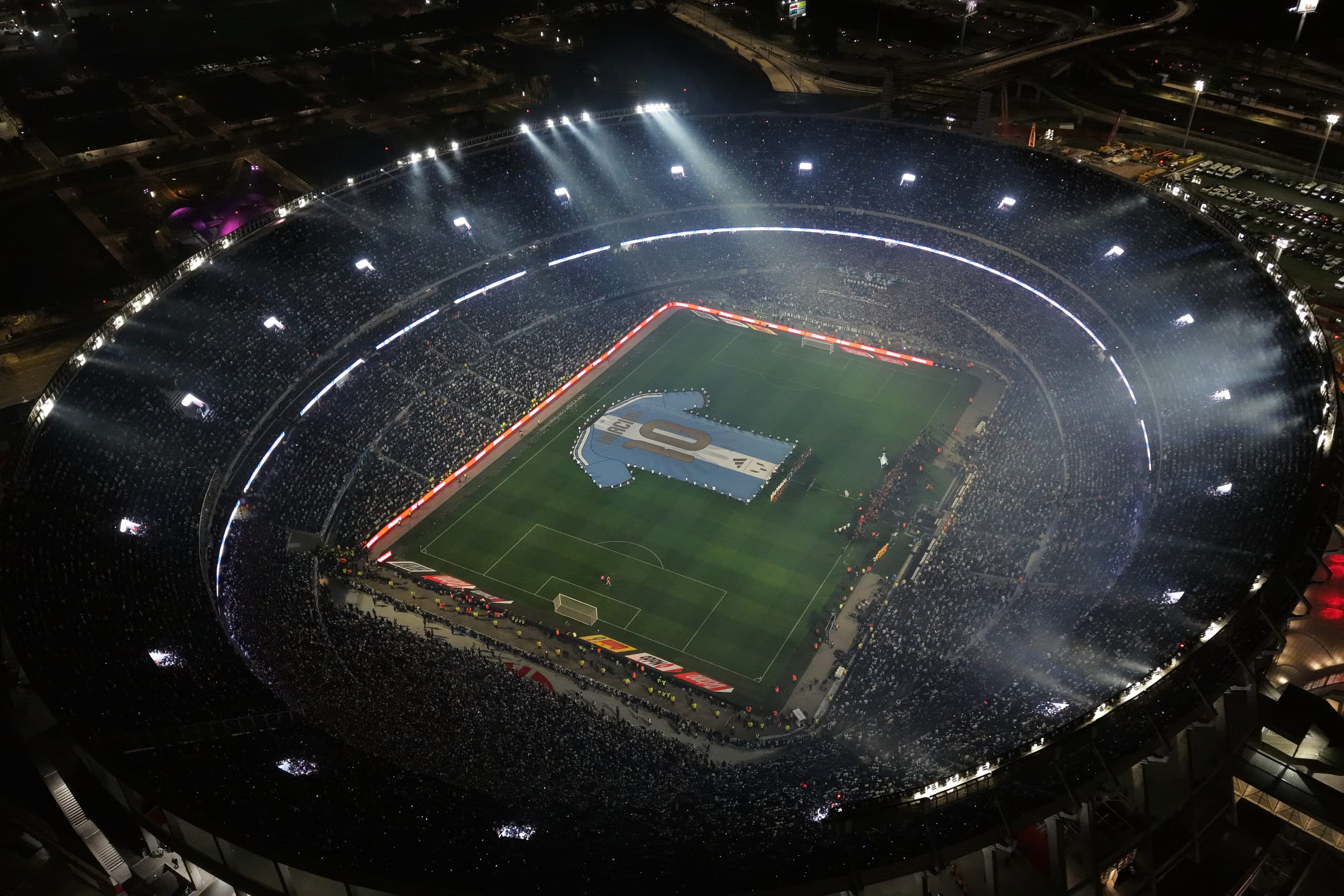
The evening was effectively a celebration of the man. A giant Messi 10 shirt was brought out to the pitch, the stadium was decked in Messi 10 banners, and the players wore a special kit with Messi’s trademark ‘M’ embossed on the right, across the aisle from the national crest. After the game, there was a drone show and an extended farewell speech, the camera cutting from teary fans to inconsolable teammates.
The football part of it went predictably: some delectable passes and dribbles, a couple of assists, and a goal. The second of those assists went to Nico Paz, twenty-two years old and a nimble, left-footed playmaker, who took a touch inside and curled the ball from twenty-five yards into the far corner of the net. It was a Messi goal while Messi watched from the edge of the pitch.
In another world, Argentina would’ve retired jersey number 10. There will neither be another Messi nor a career like his. Setting aside the compounding agony of the lost finals and the cathartic ecstasy of Qatar, we’ll probably never see a player like him again. But the jersey will stay. A FIFA clause, mandating consecutive numbers from 1-26 at tournaments, will force Argentina to keep that number. It’s the clause that kept them from retiring the number 10 in 2001 in honour of Diego Maradona, another career and life that couldn’t possibly be emulated. They had tried. But, nine years after that failed attempt, the shirt was handed over to Messi, like how, in all likelihood, it would be to Nico Paz.
But, imagine if Argentina were allowed to retire that jersey in 2001. Imagine if this part of the story ended with Maradona. Football retires jerseys quite often—the Wikipedia page for retired numbers has 260 records of fully-retired, and 51 for partials. Some are posthumous retirements, and some just silly hero-worship, but most are conclusive statements from a team that a number is now a shrine.
There is a decent argument for creating a shrine. I mean, rhetoric aside, who’s ever going to emulate or eclipse what Paolo Maldini achieved for AC Milan, or Maradona himself for Napoli? Cricket has taken this argument to heart, even though its numbers are a recent invention, more a fashion accessory than any tactical or positional signage. In August 2017, a young all-rounder from Palghar walked out wearing the India number 10. Within hours, the internet hunted him and the BCCI down. Who did he think he was? Shardul Thakur soon switched to 54, and the BCCI ensured no one repeated the mistake. Shirt numbers 10 and 7 have been permanently retired, after Tendulkar and MS Dhoni. In fifteen months, numbers 18 and 45 will be shelved too.
As lovers and romantics, we often suffer from the fear of what next? We’re afraid that the current superstar is the last in line. We crane our necks to their monuments of achievements and think, everything from here on is going to be lesser. So why hand a young man a ghost to outrun?
There is, I think, another kind of “What if..”, asked while handing over something precious to an unfamiliar young person. It’s asked with a twinkle in the eye, a tone of hope. It’s often naive, placing disproportionate trust on a spark to turn into light, but there’s an energy in it. To hand a number to a young player is to accept that the story is not ours to close, that it’s not anyone’s to close, and that not knowing how the future plays out is one of the oldest charms of life.
Manchester United’s 7 went from George Best to Eric Cantona to David Beckham to Cristiano Ronaldo. Each one of them was measured against history, as were those who filled the gaps. Brazil’s 10 reached its zenith with Pele, but its history now has Zico, Rivaldo, Ronaldinho, and Neymar. When Messi left Barcelona in 2021, the 10 was passed to young Ansu Fati, whose knees wouldn’t last for more than three months at a stretch. In 2025, Lamine Yamal was given that number, and that story, which had seemed to stall, turned towards a glorious tomorrow.
Maradona’s Argentine 10 went to Ariel Ortega, who was sent off in one World Cup quarter-final, and in the next, missed a penalty in the decider, as Argentina crashed out in the first round. Then the number went to Juan Roman Riquelme, more fluid than man, who played football with the mind of a genius and the nonchalance of a grandfather. At Berlin in 2006, with Argentina leading a goal up against Germany, the coach took him off. Germany equalised and then won via a penalty shoot-out. On the bench was Argentina’s next number 10, long haired and gangly, Lionel Messi.
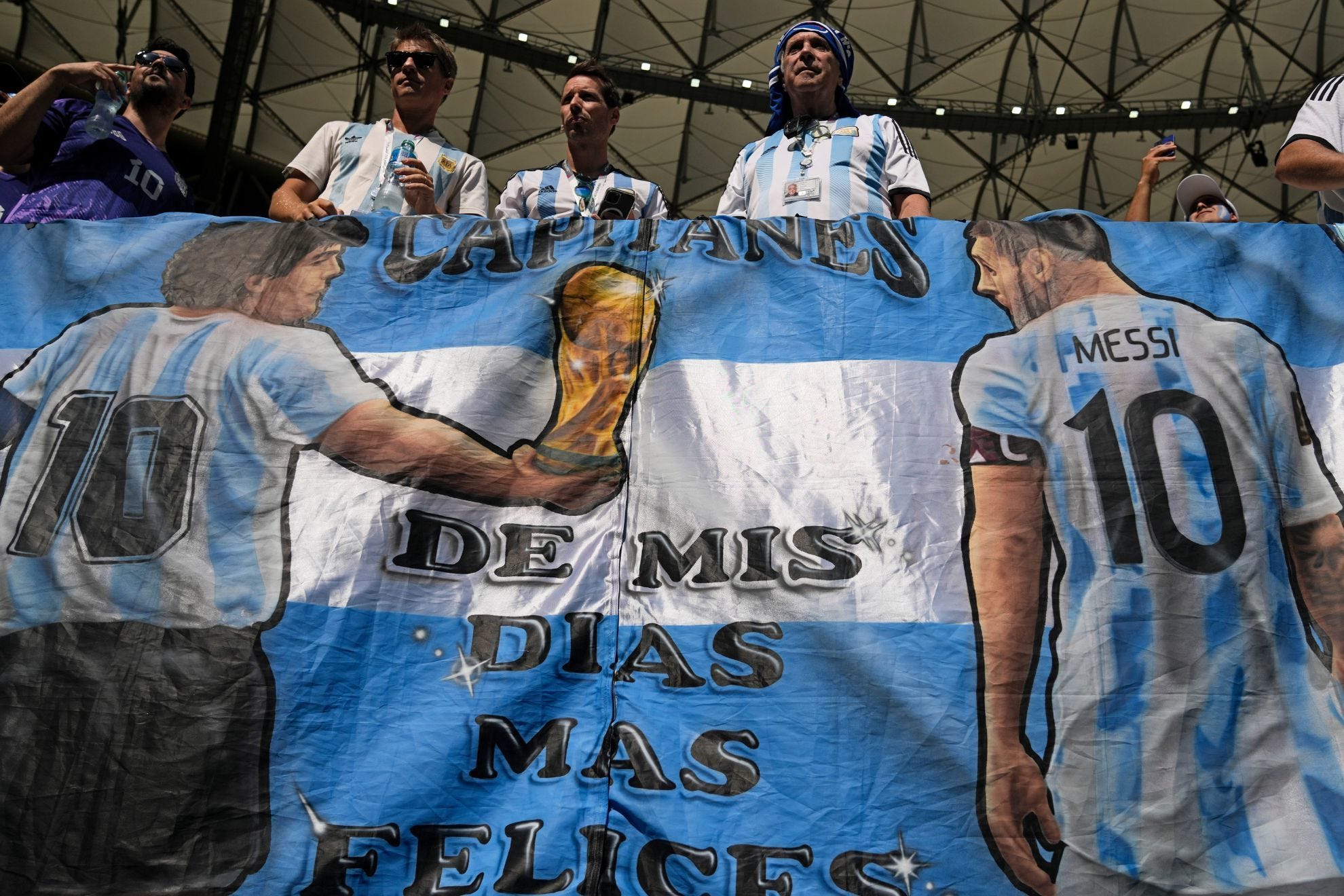
None of them were Maradona. And that’s kind of the point. The number is a thread binding someone to history, and it is to be carried forward and passed on, regardless of what one contribute to it. Messi, when he took the 10, knew what it meant. The Sisyphean story of him trying to give Argentina what Maradona did, failing, then getting up, dusting off, and trying again is much richer for the weight he was carrying.
I am glad the story will carry on. Nico Paz already has a connection to the shirt. His father, Pablo Paz, played for Argentina at the 1998 World Cup, when Maradona’s 10 was first passed on. Nico was born in Tenerife and grew up in Real Madrid’s academy—a Spanish childhood with an Argentine passport. He could not have known, while choosing, what he was walking into.
Not everyone might approve of him as Argentina’s 10. Actually, few will. They will see Paz playing right of midfield, wearing that number, and think of the guy who wore it before him. Even if he’s winning Argentina match after match, he won’t see ‘Paz 10’ banners at Buenos Aires. For at least the next many years, the name above number 10 will be either Maradona or Messi.
But, four years from now, when he walks out wearing the 10 in the World Cup opener at the Estadio Monumental, the same spot where Lionel Messi started and finished, Argentine football will have turned a page. And regardless of how his career turns out, the turning will have been the right thing to do.
To hand a number to a young player is to accept that the story is not ours to close, that it’s not anyone’s to close, and that not knowing how the future plays out is one of the oldest charms of life.
Going straight to my 'quotes' folder.
I am not surprised that Indian cricketers enjoy this number domination thing. Why are we like this? 'Isss cheeez pe nahi bolne ka' in cricket form. Love your writing, Sarthak.
Also, BJP Castle will crumble, Inshallah