

We were still locking our seatbelts when the taxi driver began speaking into his phone screen. His Vietnamese was rapid and percussive, a thoroughbred dialect. The screen’s white background filled with chữ Quốc ngữ script. And, suddenly, it beamed back: “Welcome to Da Nang. How was your flight?”
We smiled back at the driver and responded in English. Well, not perfect English, but a weird code-switched English that we slip into around unfamiliar languages. He listened, nodded, spoke into the phone again. The phone spoke to us again: “How long are you here for?”
So it went, as he took us from the airport to our hotel. Two distinctly different voices with Google Translate as the mediator. He recommended restaurants. We asked about the Marble Mountains. He offered to save his number on my phone, in case we needed a taxi later in the week. The conversation was halting and strange and, somehow, entirely functional.
Google Translate has been around since 2006. An old article in the New York Times carries both praise and apprehension.
“Though this works in theory, in practice it’s a huge hassle,” the author says. “The translation is slower, the voices of many languages robotic. Sure, the app speaks Mandarin in a human voice, but will it understand your taxi driver’s response in a local dialect?”
That was a decade ago. Now it is simply part of how Vietnam receives its visitors. The drivers lean on it without embarrassment, the tourists respond in kind. Nobody in Da Nang expected us to know basic Vietnamese terms. A port city, perhaps, naturally makes space for foreign faces and languages.
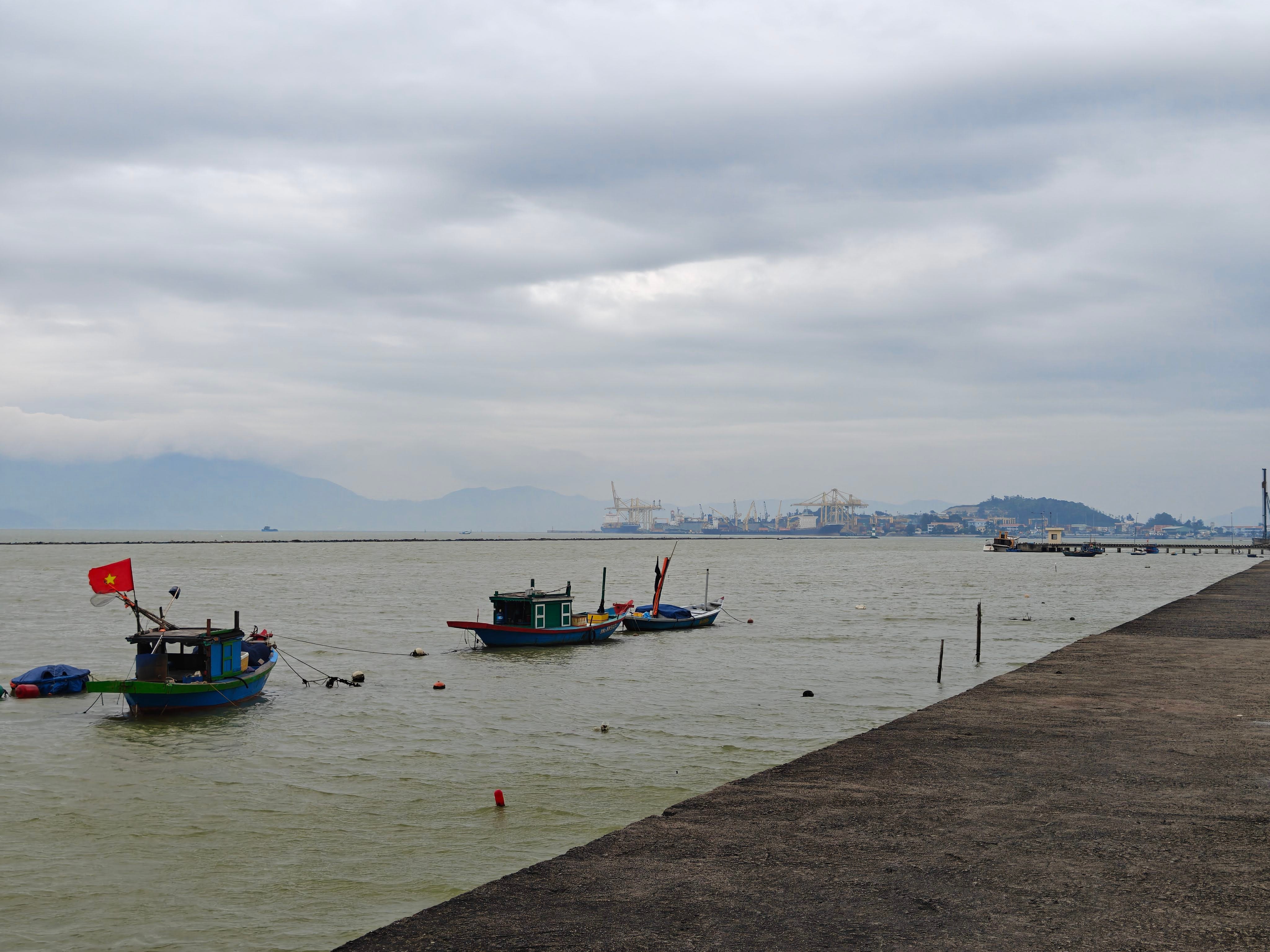
In 1858, Napoleon III’s French Army entered the Tiên Sa peninsula through Da Nang. By 1862, the city belonged to France. It was then rebuilt from scratch, its new architecture and infrastructure drawn according to the occupier’s tastes. They called the style Neoclassical Beaux-Arts—a delightfully-French term that I read of only recently.
On our first afternoon, I stood at a crosswalk near the MyKhe Beach and waited for the light to change. The street was wide enough for six lanes, the pavement wider still. Buildings were made with grill doors and spacious balconies. I watched a woman with a serene face sip coffee, must’ve been coffee, on one of those wrought-iron balconies, her eyes taking in the city, a small dog asleep at her feet.
Befriending the clock was a way of life here. Leafy green cabs tailed Vinfast sedans without jostling or honking. On the open highways of the outskirts, lush hills rising on one side, drivers seemed content at cruise-mode, uninterested in testing the limit of their vehicles. Morning runners jogged at a marathon pace. A slick restaurant in An Thuoung—the main tourist district—told us flatly that food will take a minimum of thirty minutes. Imagine saying that in Bangalore.
The weather was gorgeous. I stepped outside expecting the air to sit on my skin the way it does in Chennai. Instead, a cool, chilly breeze slid down from the Son Tra hills. I hadn’t packed for this. Nobody on Reddit had mentioned that Da Nang in December could make you reach for a jacket.
At times, we walked without a destination in mind, just to get a feel of the place. That’s when I noticed a Vietnamese cultural icon: the plastic stool. Red, green, blue, even the odd sherbet orange. They were everywhere—on sidewalks, outside shopfronts, clustered around tiny tables where men and women drank coffee and watched the street. The plastic itself looked cheap, the kind of thing that would crack if you sat down too hard. And yet everyone sat on them, seemingly without trouble.
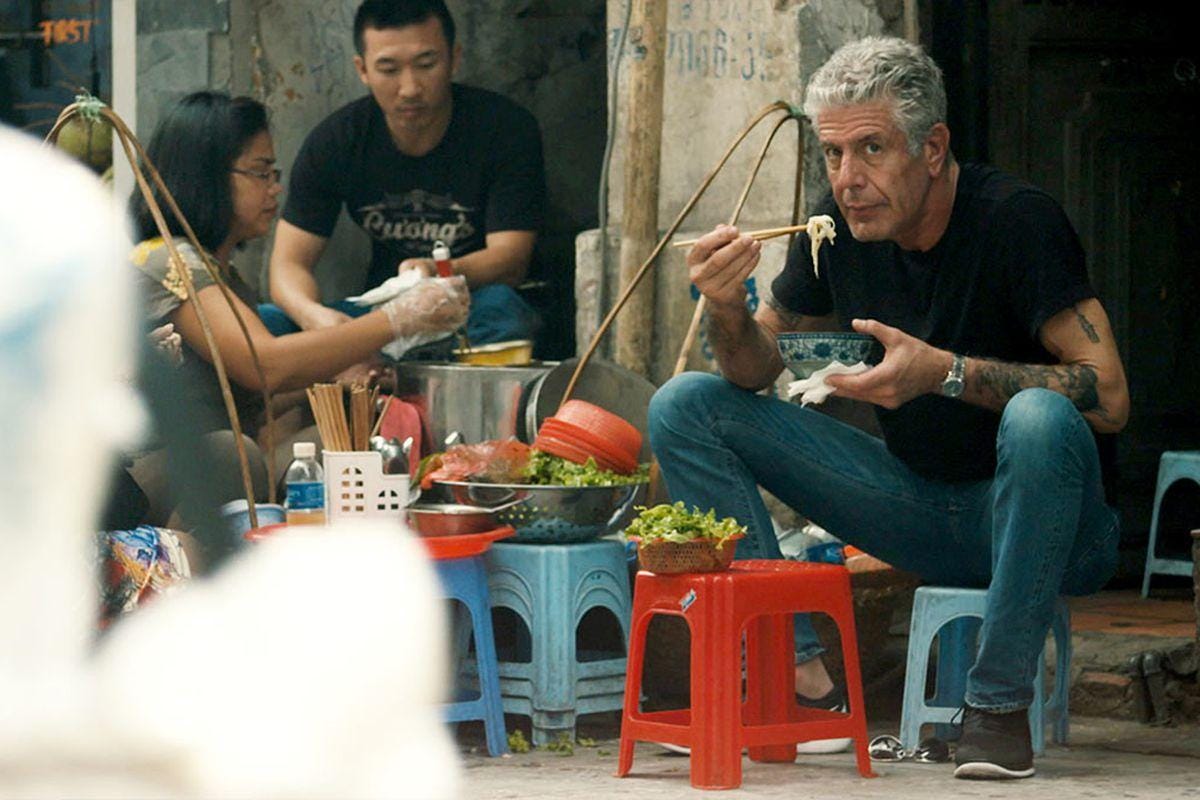
These chairs, I learned, are a modern adaptation of an old habit. Back in the day, the Vietnamese would sit flat on woven mats spread across earthen floors. European architecture, with its hard cement-pavements, turned the mats obsolete. Then, decades of colonial rule and war pushed Vietnam into the ‘subsidy era,’ where everything was state-owned. Private shopkeepers improvised with bamboo chairs and low wooden stools.
The 1986 economic reforms finally opened the floodgates for private enterprise. Vietnam’s plastic industry boomed and we got the third iteration of low pavement-seating. These plastic stools were cheap, waterproof, and mobile. Three decades later, here they are, synonymous with Vietnamese street life.
The most famous tableau capturing it all is, of course, the Barrack-Bourdain dinner.
It’s a charming scene, blending the unique sound, sight, and taste of South East Asia. Trust Bourdain to paint that picture. But regardless, that frame has always appealed to me. Street food in the evening is my favourite way of introducing myself or someone else to a city.
That evening, Obama and Bourdain had a bún chả. The restaurant—Bún Chả Hương Liên—is now obligatory for travellers in Hanoi. Understandably. It’s not everywhere that you get to enjoy the same setting and meal as a recent American president and the world’s most famous chef for less than $10.
As much as the bún chả appealed to me, I started with the lighter, more portable bánh mì. My first was a large and loaded egg bánh mì, almost three-quarters of a footlong.
Indian politician and part-time Shakespeare-impressionist Shashi Tharoor once described the idli as, “a sublime creation, a perfect dream of the perfectibility of human civilisation.” I don’t necessarily disagree, but the same words can also be used for a bánh mì.
The bánh mì is made with a light baguette, where the crust breaks with a crunch. The choice of fillings ranges from pickled cucumber to sliced duck, all tucked in neatly inside the bread, nothing spilling out. Fairly European in form, it’s extremely Vietnamese in taste, with soy and chilli sauces dancing on your tastebuds.
I did a double-take at the bill: 20,000 Vietnamese Dong(INR 65). Less than a dollar. The chicken variant cost 35k Vietnamese—INR 100.
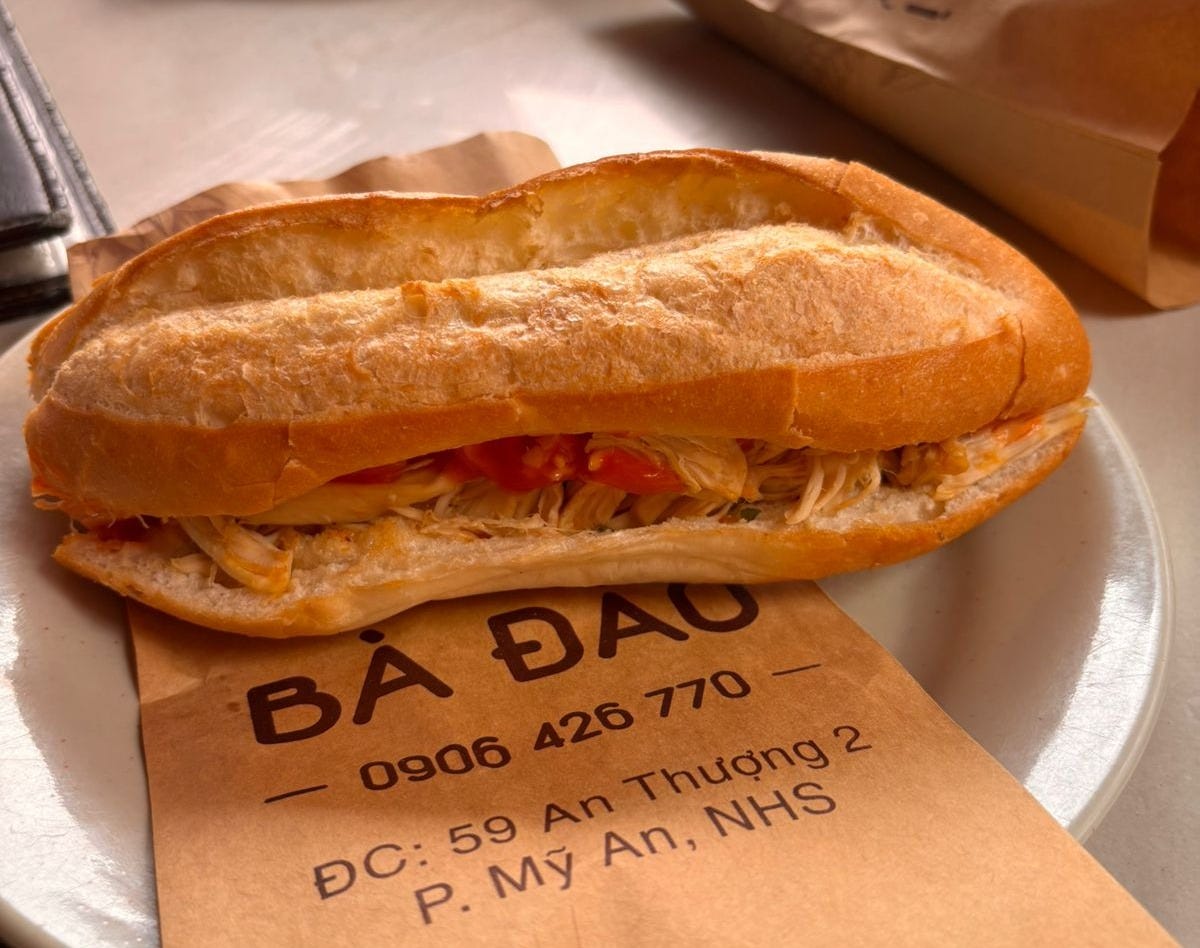
Better still, its primary characteristics are retained across makers. Barring subtle changes in taste, probably from the meat, I found it hard to tell the difference between the street offering in An Thuong from the restaurant-made version I got through a local delivery app.
Vietnam is doing something right with their food. Perhaps the produce, perhaps the imports. But across the menu, whether it was the texture of meat or juice in their fruits, I barely went a meal without marvelling at the quality. And, no, it wasn’t placebo.
Our companion through the city was Lộc, a local taxi driver. We found him on our second morning through the cab-and-delivery app Grab. He too, like the others, used Google Translate lavishly. By now we were participating equally, often initiating conversations about various things Vietnam.
Lộc used to be a truck driver in North Vietnam many years back. Grab let him stay close to home, he explained. Better pay, flexible hours. He was a natural conversationalist— enthusiastic, knowledgeable, and always smiling. At one departmental store, where he took us to get rice and yoghurt for the two toddlers in the group, he showed us pictures of his three daughters. The eldest was a teenager, the youngest in her mother’s lap. His eyes lit up.
Lộc soon turned into our guide, suggesting us places and good times to visit. Crucial insight, given we were visiting during New Year’s week and most spots were going to attract heavy crowds. He told us that crowds to these places come in sine waves. Lộc took us to the Marble Mountains, Coconut Forest, and Hoi An, offering to wait as we took our sweet time to walk and explore.
All three were crowded—the Coconut Forest with a certain species on whom I will write a full essay one day—but for very obvious aesthetic reasons, Hoi An will stay with me the longest. I mean, just look at this.


The bridge reminded me of the Komodo dragon scene in Casino Royale.
Hoi An has the feel of a place from a different time. Its lanes are narrow and buildings stand shoulder-to-shoulder with each other. Ancient bridges span across canals. I learnt later that one of them, hilariously named ‘The Japanese Bridge’, appears on a currency note. Fair enough. The whole town is an illustration of how to preserve beauty through centuries.
Its status as a UNESCO heritage site brings more than 10,000 visitors a day. While we were there, tourists kept streaming in, ceaseless. I watched one group in matching jerseys following a leader who wore a brighter variant. He had a flag perched on his backpack, a Bluetooth headphone-mic curved around his jaw, and a mini amplifier strapped to the hip for communication. They moved together, tightly bound. I could tell they were Chinese from the flag stitched to their sleeves.
On the way back to Da Nang, we strategised with Lộc about the correct day to visit the Golden Bridge. The most popular and Instagrammed tourist spot in Vietnam was guaranteed to be packed on the morning of 31st December. Take it easy, he said, and let’s try for 1st January.
If you’re in Vietnam, go to the Golden Bridge. Sure, you’re singing the conformist tune, but it doesn’t matter. Trust the pictures and go.
We took a 15-minute cable car ride from the Ba Na Hills basecamp to the Golden Bridge. The cable car rose slowly and the basecamp fell away. Below us, the forest canopy was dense and endless. A stream, gemstone blue, narrow, snaked through the trees into the lap of a waterfall.
When the Golden Bridge came into view, our eyes widened and jaws fell to the floor. Two enormous hands, carved from the mountain, the colour of weathered bone, cradled a narrow walkway. It was designed to evoke the image of the “giant hands of Gods, pulling a strip of gold out of the land.” And it looked that way too.
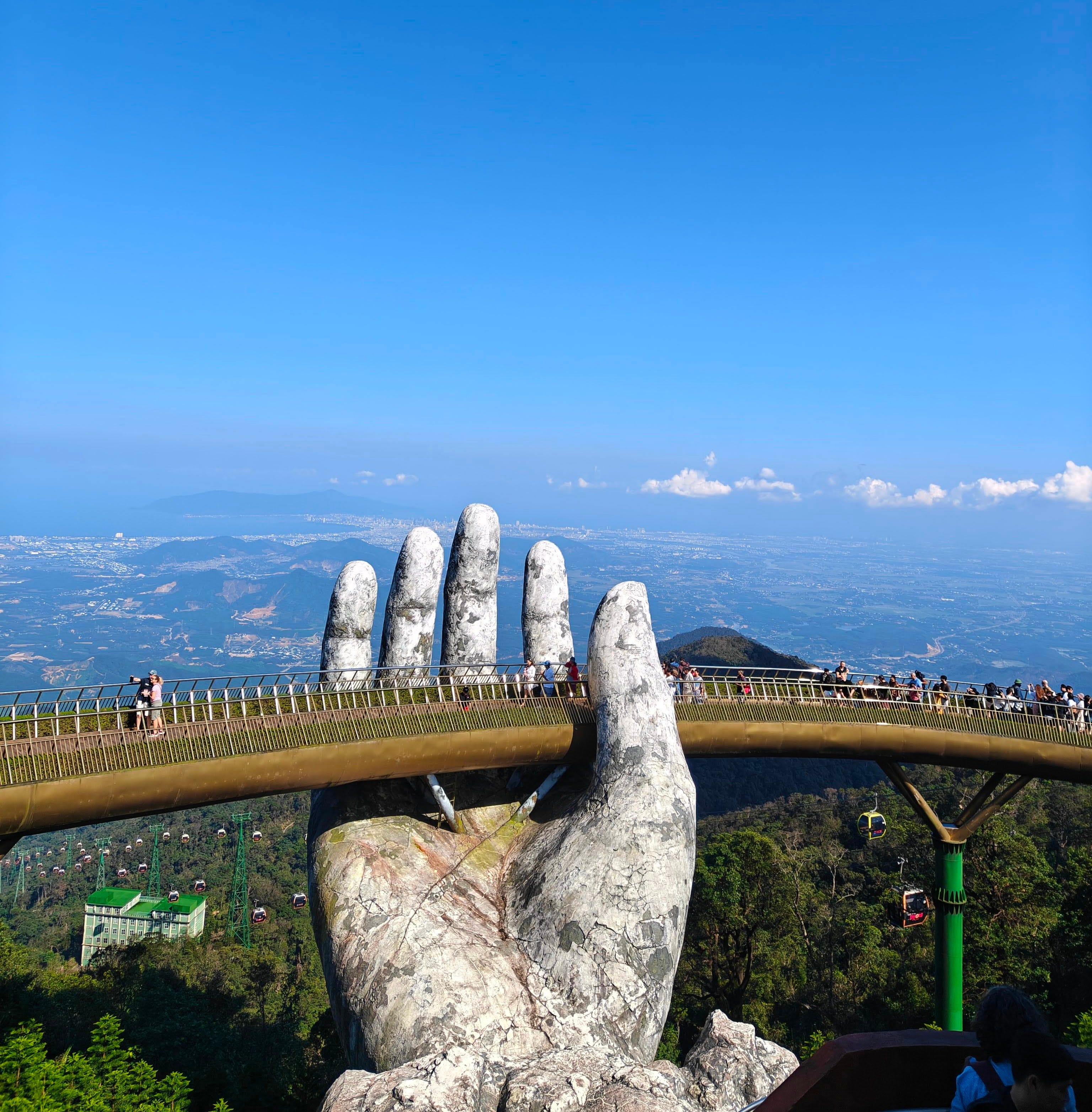
Every visitor, without exception, posed for a photograph, then checked the result, then posed again. John Williams-esque orchestral music swirled up through hidden speakers. It was ridiculously moving.
We took another cable car from the Golden Bridge, then another. The network seemed to extend in every direction—up the mountain, across valleys, sideways to resorts and hotels. Most passengers were headed to the French Village, so we followed.
The village was a theme park dressed in European costume. Cobblestone walkways led past ticket booths and souvenir stands. The cable car stations were named Bordeaux, Lyon, Marseille. One restaurant served pizza, another offered burgers with Vietnamese iced coffee. In one cafe, up the village, we sat beside large windows, cued up behind the white marble Buddha overlooking the city of Da Nang.
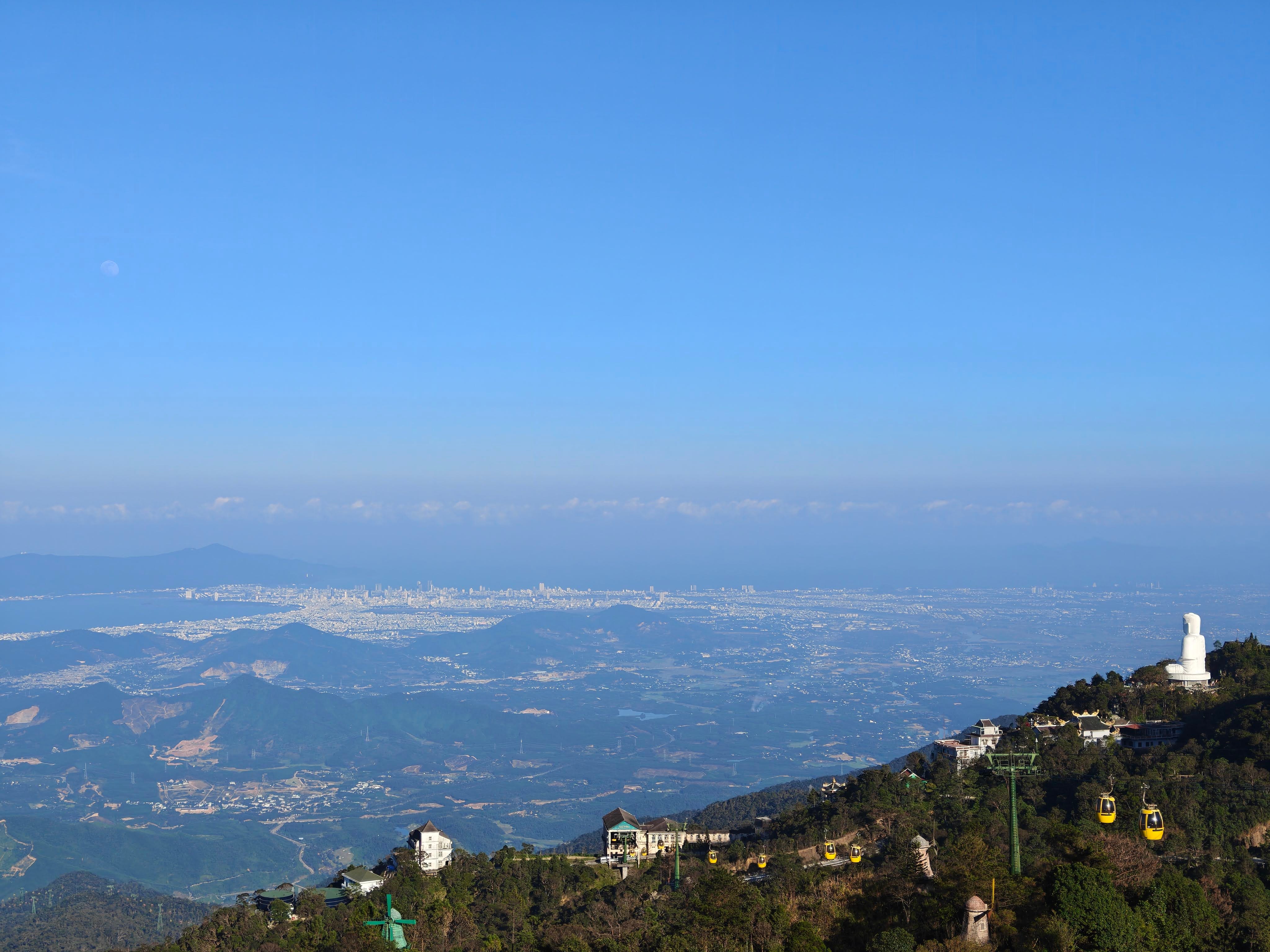
By late afternoon, I was struggling from the cold. I had dressed for the tropics, linen shirt and shorts, and the mountain air was making me pay for it. I sat by the window anyway, watching the Buddha and Da Nang, and found myself thinking about the view itself. The placement of the stone statues, the Linh Ung temple compound, this cafe, the height of the window sill. It was not an accident.
I had noticed this everywhere. On the waterfront promenades in Da Nang, on the bridges that curved just so over the Han River, or the plastic cap that protected ice-cream softies from melting. Things were placed with care. Not grandly, not ostentatiously, but with an attention to function and what the eye would find when it landed. It is a small thing, maybe, but rare enough that you notice when it’s there.
The cable car back down was quieter. The kids were fading. Below us, Da Nang came slowly into view. The fibreglass skyscrapers were gleaming from the sun. By the time we reached the basecamp, the sun had dipped completely, the sky painted in ribboned lavender, and the air was cool.
We had one more day. That last afternoon, we wandered through department stores looking for sauces and seasoning to take home. I bought a small pack of granola yoghurt and ate it on a plastic chair outside, watching bikes and cycles slide past in their unhurried way. I thought about how rarely tourist cities let you do this, just sit and be slow without feeling like you’re missing something.
My book for the trip was Paul Theroux’s The Great Railway Bazaar. He wrote it in the early seventies, crisscrossing across Europe and into Asia by train. The book is less a travelogue and more a mosaic of portraits with this typically intimate brush. His Vietnam chapters are brief; the war was just ending, the country difficult to enter. The country itself was just about standing back up after many decades of searching for its identity and pride. I wondered what he would make of it now. The plastic chairs, the Google Translate conversations, the theme park on the mountain.
There’s a train route that runs the length of the country, from Hanoi to Ho Chi Minh City. Thirty-four hours if you don’t stop. I looked it up from my hotel room twenty-one floors above the Han River, watching small trawler boats slip in and out of its narrow neck. It would be lovely to watch Vietnam unfold through a train window—the rice paddies, the coastline, the cities arriving and receding.
I know very little Vietnamese. Xin chào, cảm ơn, and that’s about it. Next time I’ll learn more. Maybe next time I’ll take that train and add more chapters to this story, chapters named Saigon and Ho Chi Minh and Hanoi. And, of course, more pages to Da Nang.
I loved it here. Da Nang is the kind of place that makes you think about staying. Not forever, maybe. But longer than a week. Long enough to learn the roads, to find a favourite bánh mì stall, to sit on a plastic chair by the river and watch the trawlers come in.
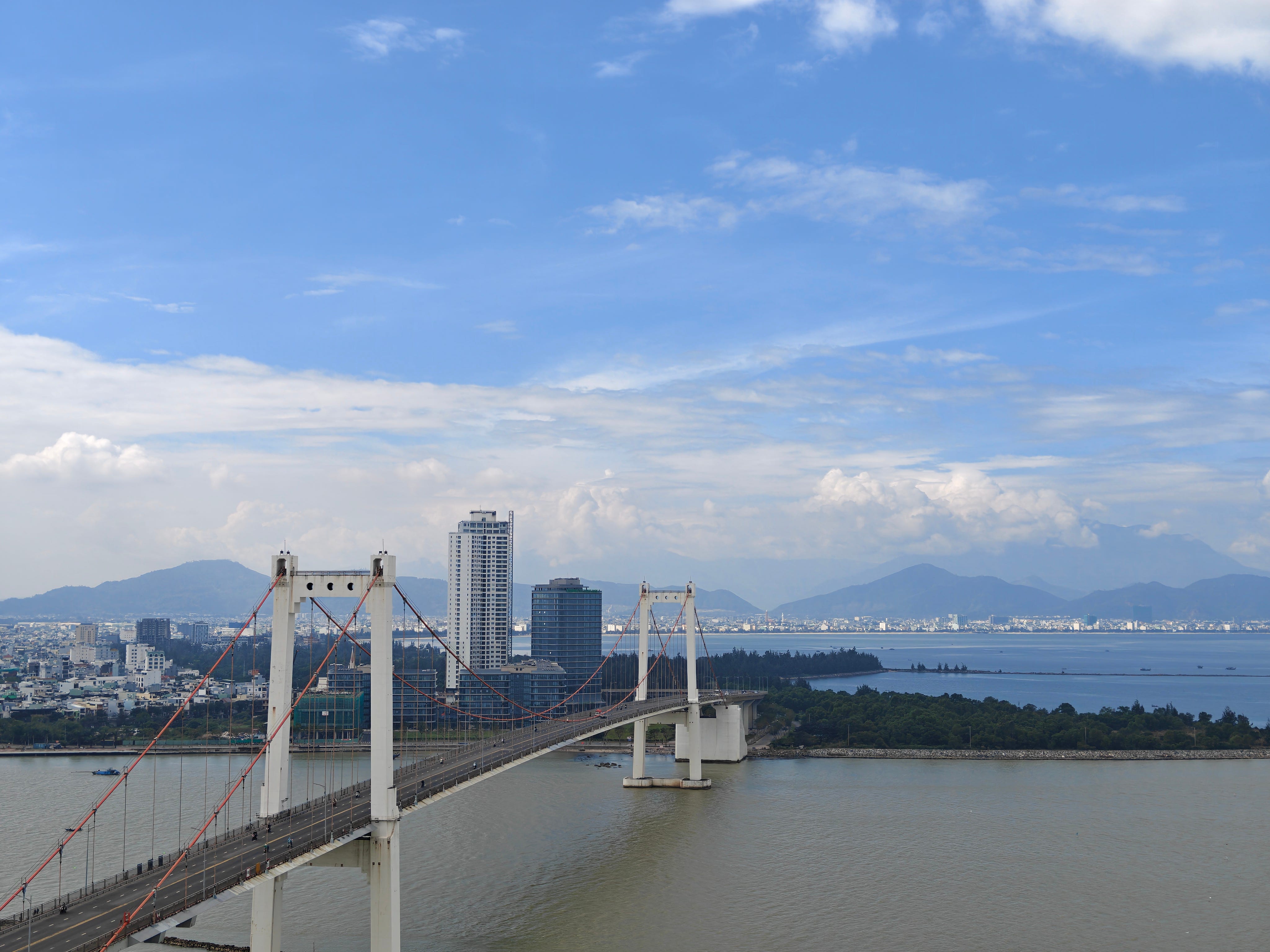
This resonated deeply and this is what i miss in India.
"I had noticed this everywhere. On the waterfront promenades in Da Nang, on the bridges that curved just so over the Han River, or the plastic cap that protected ice-cream softies from melting. Things were placed with care. Not grandly, not ostentatiously, but with an attention to function and what the eye would find when it landed. It is a small thing, maybe, but rare enough that you notice when it’s there."
What beautiful, beautiful writing Sarthak!! Please make sure writing a book on travel is on your list of things to do.