

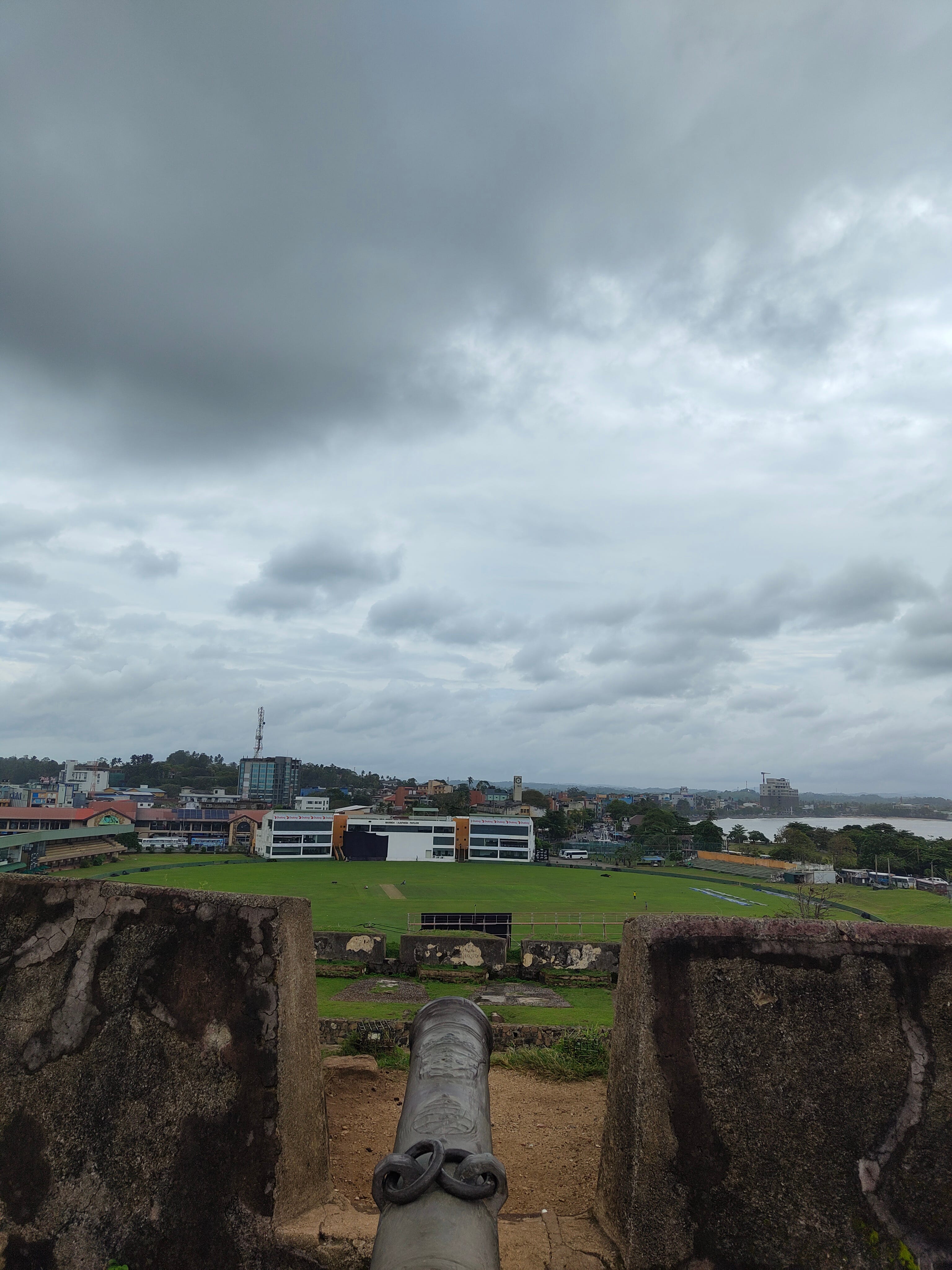
A couple of years back, I went to Sri Lanka for a cricket match. I had long wanted to watch a game at Galle, where the stadium sits next to the northern ramparts of the Galle Fort, and visitors can lean on a 17th century cannon and watch the play. But the matches that autumn were scattered elsewhere. So I hung around the city for a couple of days, took in the orange sunset, played a game of cricket by the sea, and hopped on a train towards Colombo.
At the R Premadasa Stadium in Colombo, I met Nuwan. He wore a mid-2000s Sri Lanka jersey, no name on the back, heat-printed logos fraying from two decades of washing. Nuwan saw my India shirt and immediately reminded me about the 1997 Test match, at the ground where we stood, when Sri Lanka scored 952 runs in one inning. Straight for the jugular. He followed that with a hearty laugh and a tap on my shoulders. The tap landed a bit heavy. Nuwan was short and portly, but the jersey fit him snugly, lining the ridge of his shoulders down to the curve of his side deltoids. His biceps creased the sleeve. There was something very past-athlete about him.
He used to be a club cricketer, but not much good by his own words. He played a few seasons as a floating middle-order bat, shepherding the tempo like his great hero Arjuna Ranatunga. Time caught up with him. His lack of explosive instincts was compounded by a rickety knee, and soon, he was getting in the lineup only thanks to charity.
These days, Nuwan spends half his year in Colombo and half at home in Negombo, which he was adamant I visit next time. He had a specific month in mind too: March.
Why March? Sri Lanka rarely hosts cricket in March, so if he didn’t mean the cricket season of July-August, surely winter was the best time in an island country? “No, come for the Blues derby. You know what it is?”
I did, not from any personal familiarity, but from text—Shehan Karunatilaka’s Chinaman and the many essays about Sri Lankan cricket I’ve read over the years.
The Derby is the annual cricket match between Royal College and St. Thomas College in Colombo. If you’re a talented young cricketer in Sri Lanka, there’s a high chance you’ll play this game. Hundreds, sometimes thousands, turn up every year, giving it the gravitas of an international contest. At times, the noise here is greater than what you might expect at a Test match. The Blues rivalry goes back more than 100 years, played through civil wars and pandemics. Nothing comes in its way.
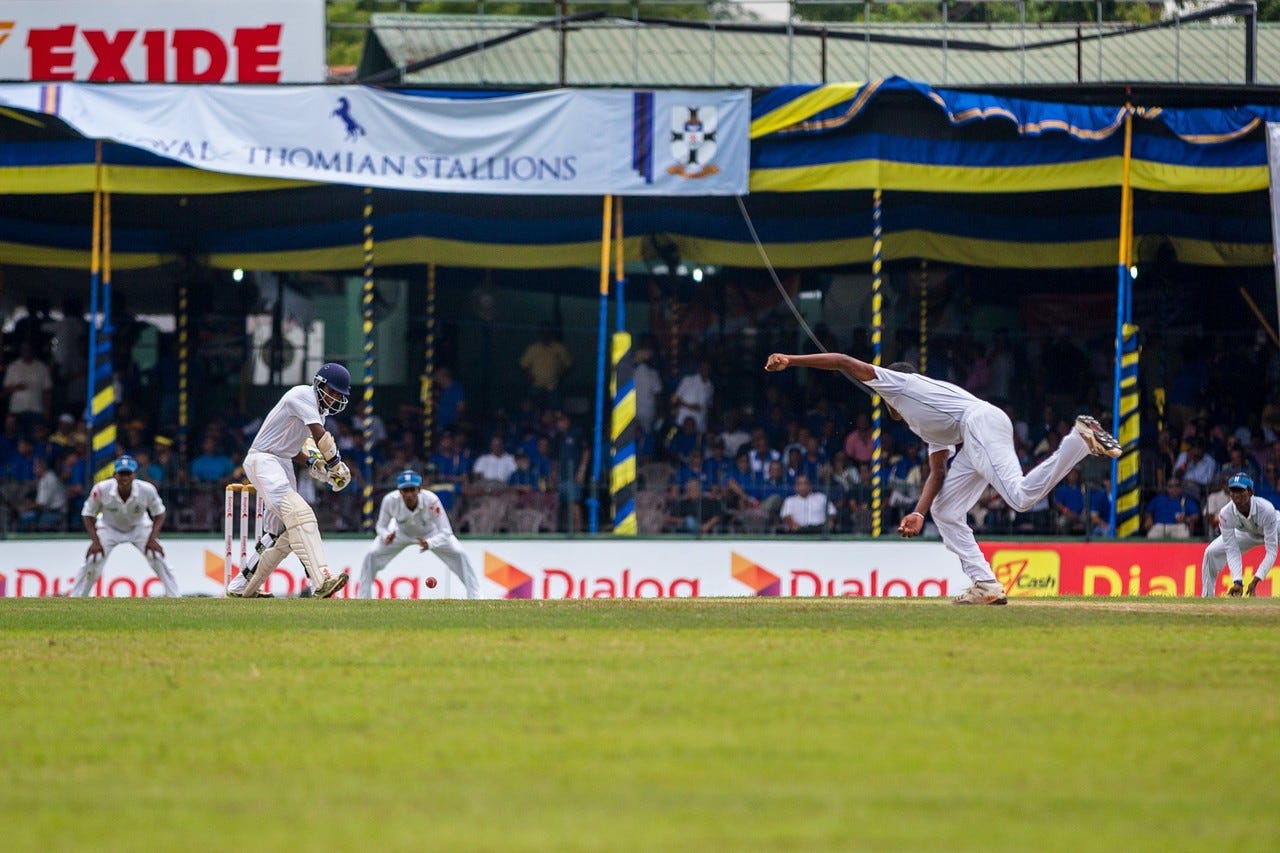
Pratyush Sinha from Cricbuzz has written a wonderful essay on Ramesh Abeywickrama, the current Co-Chairman of the Royal-Thomian Joint Match Organising Committee.
Here’s a small excerpt to give you a hint of the significance of this game.
“It was a bubble before a bubble,” he says of the years from 2007 to 2009, as Sri Lanka’s decades-long civil war reached its final and most violent phase. “People know the SSC as this historic cricket ground. But those three years, we had anti-aircraft guns inside the premises. Metal gates everywhere. Armed personnel. You could see rifles. It wasn’t just cricket.”
Security was tightened further because the families of the President and Prime Minister were often in attendance at the Big Match. Spectators were ferried in buses arranged by the organisers, each one checked before anyone boarded. “A bomb can explode in the bus too, right?” Abeywickrama says. “So we had to think of everything.”
School rivalries can be intense. For thirteen and fourteen-year-olds they are the realest thing in the world, their replica of what the famous ones do on television. I remember walking into elocution and debate contests sizing up my opponents, stretching my arms and legs as I waited in the gallery, as if I was going to finish my three-minute sermon on planting trees and immediately hit them with a two-footed tackle. With that information, do the math on the kilojoules of power I—to be honest, all of us—emitted before inter-house or school matches. It was madness.
In London, home of the Tradition Is Gospel™ cult, kids from Eton and Harrow have been playing an annual cricket match at Lord’s for nearly 220 years. This one year, a streaming platform broadcast the whole match. The playing area was substantially smaller than an international game—the boundary ropes were pulled in and the pitch was laid out on a narrow strip at a couple of long hops’ distance from the stands. One bloke bowled a searing yorker, dismantling the stumps, and his shrill celebration was the only audible sound through the broadcast. The camera panned wide to show a pale and blank Lord’s, just the way it would look on a winter morning when cricket shifts eastwards.
A few hours after this is published, I’ll be on a flight to Mumbai. The cricket match I am going for will not involve any school kids, but hopefully, over the following couple of days, I can squeeze out a morning at Shivaji Park or Azad Maidan, and watch cricket consume the youth of an entire city.
The Giles Shield and Harris Shield finals have also been on my bucket list. I first read about them in a Sachin Tendulkar biography, sometime in the ‘90s. School cricket is the first chapter in Tendulkar’s myth. Scour through a library in Mumbai, and you’ll find newspaper reports of a skinny boy from Sharadashram Vidyamandir lighting up Giles and Harris Shield games.
In the 1988 Harris Shield semifinal, Tendulkar took strike alongside Vinod Kambli. Tendulkar was fifteen; Kambli, sixteen. 664 runs later, their names had been inscribed into the Guinness Book of World Records.
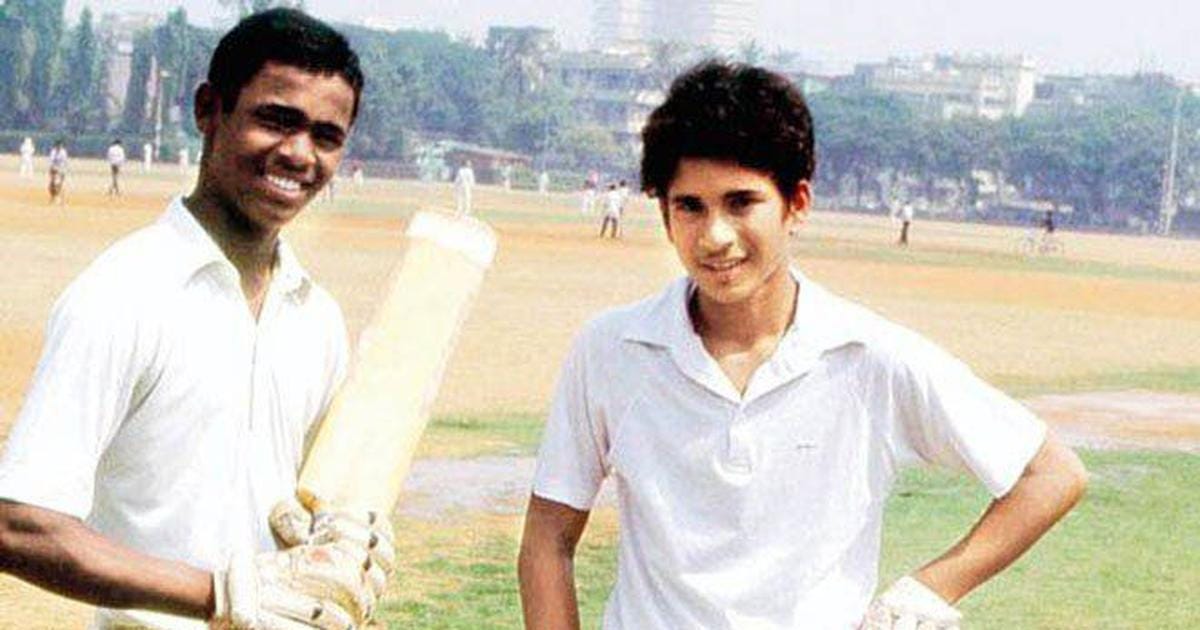
Think of any Mumbai cricketer, and he would’ve played these matches. Scouts from across the city sit in canopied tents. Local reporters beeline near the boundary ropes, hoping to catch the first scent of the next Mumbai or India cricketer.
School cricket in Mumbai—and evidently, Sri Lanka—is a great reminder of why this sport comes to us with our DNA. And why, like some writers have observed, cricket in the subcontinent is neither sport nor religion, it’s a condition.
📖 Reading List
A New Yorker essay on why some people are able to function on very little sleep. As someone who doesn’t sleep all that well—between five and seven hours every night—this was fascinating. Of course, the author doesn’t advocate less sleep, but finds a few people who sleep four-ish hours every night, and their alertness is not affected at all.
21-year-old Texan high jumper Osawese Agbonkonkon is currently writing his second science fiction book. The book is part of a series called “Psychic Suit”, where characters are blessed with psychic powers, and as they navigate life, find themselves at forked roads in the moral wood.
This report on DNS censorship in India. The data is filtered by internet service providers and websites. You’ll be surprised by some of the names.
This essay. Deepa Anappara navigates the death of her sister, and imminent divorce, and sets off for the Himalayas.
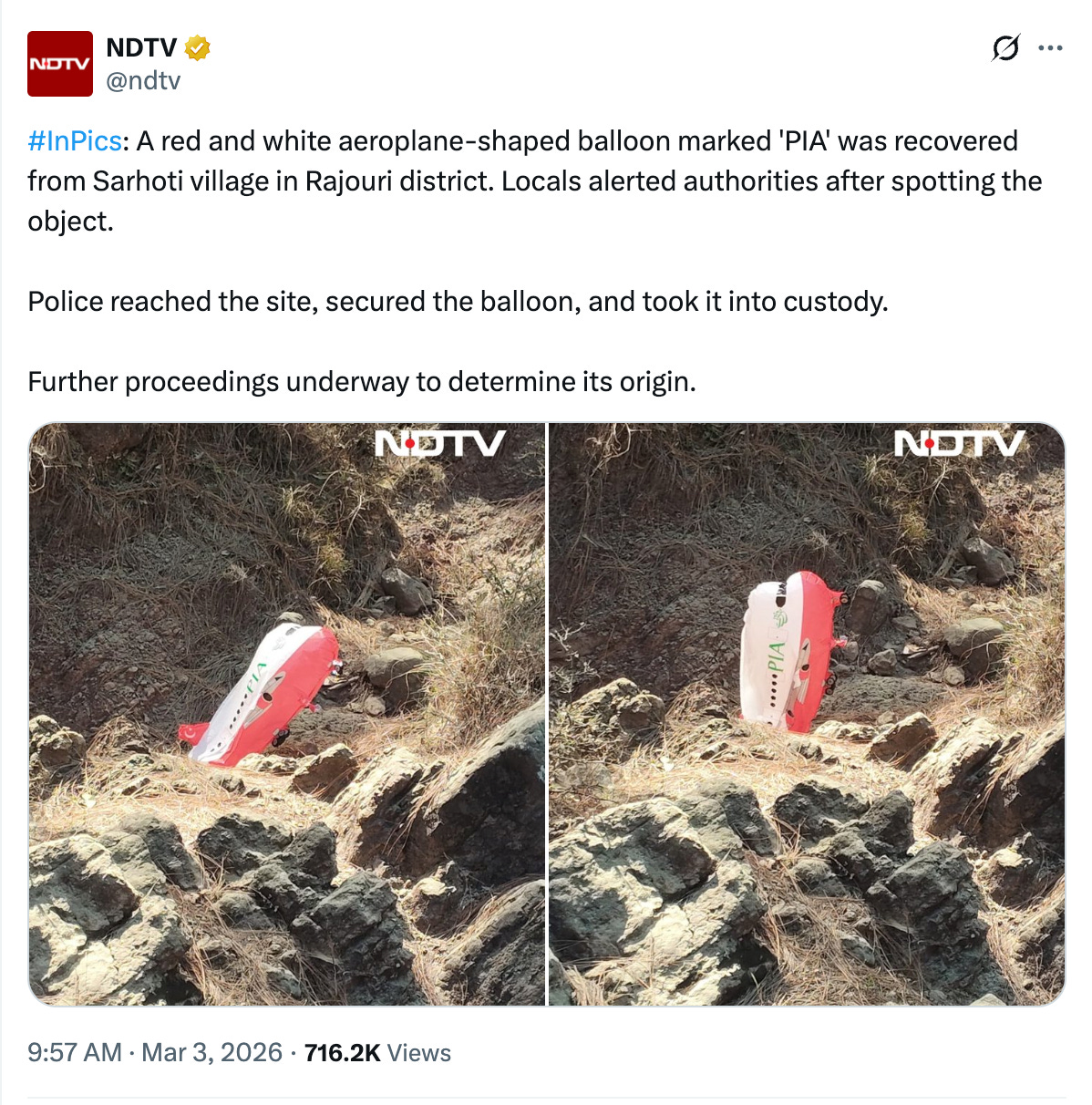
It’s been a bleak period for the world, not least India. Here’s a screenshot from a terribly disturbing event in Rajouri, the details of which are too gory to be explained.
🎵 Earworm
A full concert by the big beautiful bald head that was responsible for the background score of Arrival.
That’s all from this edition of The Jukebox. See you soon!