

Welcome to the third edition of The Jukebox.
Last month, The Economist published a crisp essay on the astonishing rise of the bagel, tracing its journey from what the magazine called a “niche Jewish bread in the 1960s” to a five-billion-dollar global market in 2025.
The trajectory is remarkable and, in its way, deeply American: an immigrant food, gradually stripped of its origins and brought to the supermarket aisle, where it sits in plastic bags beside the English muffins and the hamburger buns. The bagel has travelled too. I have eaten bagels in Delhi, in shops barely wider than a doorframe, wedged into alleys behind Mughal-era forts.
The essay got me thinking about another bread I notice at just about every café in Bangalore and Delhi: the sourdough. A good sourdough is worth jostling through morning work traffic for. If you’ve had a poached egg on avocado spread on a slice of sourdough, with chilli oil drizzled on top, you know what I’m talking about.
The first three search results on Google for the popularity of sourdough are: “Sourdough is having a moment.. again”, “Why is everyone suddenly obsessed with sourdough”, and a video titled, “Why is sourdough bread so popular”. So I went digging.
The discovery of sourdough was a happy accident. In Ancient Egypt, someone left a mixture of flour and water exposed to open air, allowing lactic acid bacteria to do its thing. Once baked, the resulting loaf was lighter, more flavourful, and substantially more digestible than the dense and coarse flatbreads of the era.
The Romans went one step further. They used fermentation starters derived from grape juice and wheat bran. The acidification—the “sour” in sourdough—was essential for preservation.
But for centuries, it was very much a niche curiosity, like the bagel.
In the mid-2000s, we were introduced to the term “gluten-free.” Industrial bread was demonised to the point where many bakeries started holding only long-fermented loaves. *drum roll, big brass chords, pulsing violins* Enter, the sourdough.
Its commercial success was a function of two chemical signatures:
While sourdough is not gluten-free, it is widely considered “gluten-friendly” or “low-gluten.”
Sourdough fermentation significantly alters the glycemic response of bread, thus making it a better option for pre-diabetic and diabetic consumers, and those generally careful about their gut health.
You remember reading the word “artisanal bread” at bakeries? Yes, that was mostly sourdough.
The Covid pandemic amplified its profile. Bakeries suffered from frozen supply chains and locked-in consumers had to adapt. They tried to make sourdough at home, didn’t always succeed, and turned to ordering in. Et, voila!
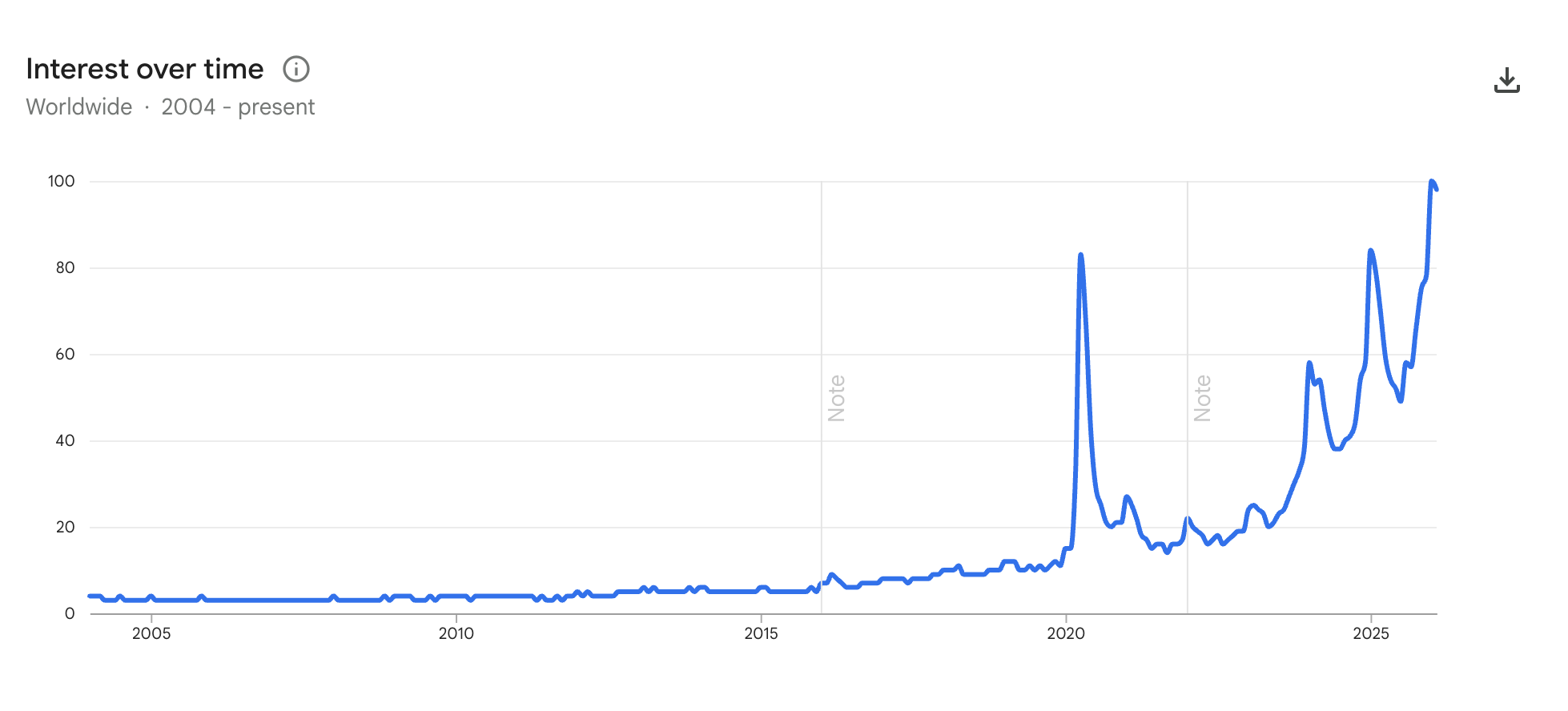
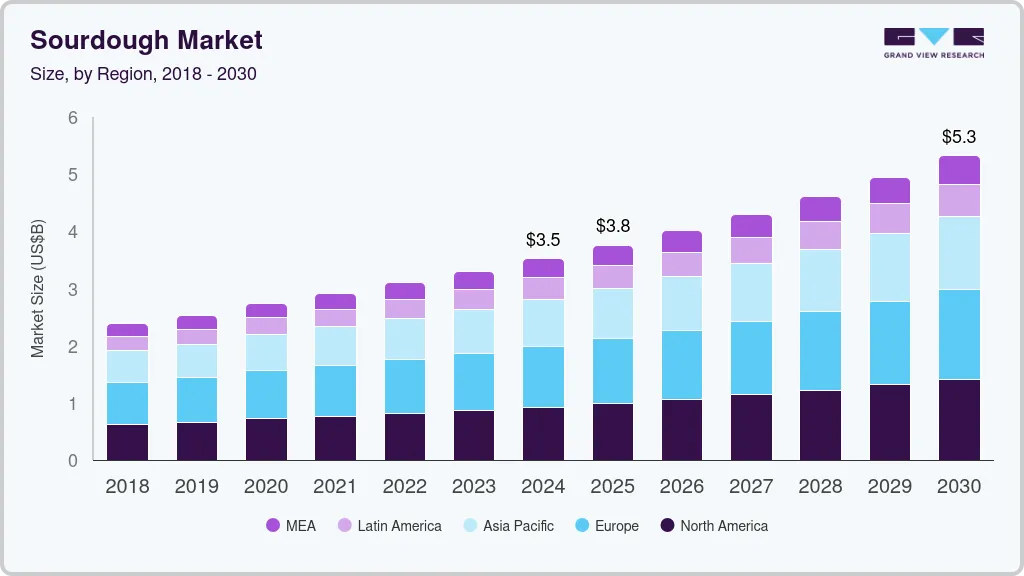
The numbers aren’t quite bagel yet, but the sourdough is climbing on the list of non-industrial bread. The market for sourdough is valued at approximately $4bn, with projections suggesting a surge to nearly $6.5bn by the mid-2030s.
🤖 Real is Artificial
The most insane news from last week is about a social media platform for AI agents, by AI agents, where AI agents speak to each other and bitch about their human commandeers.
While reading early SciFi, or even Asimov’s Foundation, I did not once think I’d have to write that sentence.
Either way, we’re here. Anthropic is raising $20bn—you read that right—in a few days. Claude Code is all over the internet. Your life, as you know it, stands on the doorstep of complete automation.
I have a brief reading list, two articles which zoom from the hype and focus on the foundations of mass AI.
A neuroscience professor writes about consciousness and AI.
An incredible Asimov Press article on what it takes to emulate a brain—human or mouse—inside a computer.
In the middle of this brain fog, I stumbled onto this. Andre Agassi has partnered with IBM to launch an AI platform. Again, a sentence that I wish was SciFi but it is not.
According to this article, “The as-yet-unnamed platform, which will live under the witty banner of Agassi Intelligence, includes a website and app that will be available internationally. The website will launch sometime this spring with a staggered roll-out of e-commerce (tennis racquets, paddles, sports nutrition, etc.), a personalized racquet/paddle recommender, and the AI coaching model.”
“AI-recommended creatine” will soon be a completely normal response to, “What did you have today?”
📍Mapping the Maps
Taking a hard left from AI to things people did, when the world was less equipped, let’s talk about maps.
One of the coolest books I read last year was Mapmatics. The author manages to simplify the idea of maps—and cartography, in general—while also nourishing the reader with history and context behind how the world is drawn.
It’s well known that all 2D maps are essentially wrong. Mapmatics goes one further and points out the insane ways in which cartography and geometry was treated when the world had fewer tools.
“Columbus decided to pick and choose his data to make the Earth as small as possible and the Indies as near as possible. In the end, he chose the estimate of the ninth-century Arab geographers who found the Earth’s circumference to be equal to 20,400 Arabic miles, each mile about 2,164 metres long. This would make 44,146 kilometres, which was close to today’s value, but way too large a number for Columbus’s taste. So, he took the figure of 20,400 but claimed the unit to be not the Arabic but the Roman mile, which was equal to 1,480 metres – making the Earth’s circumference only about 30,192 kilometres.”
I have been looking forward to The Web Beneath The Waves—Samanth Subramanian’s book on underwater cables that connect the world. It’s already out in the US and EU, hopefully soon in India too. Here’s an excerpt.
Or, check out the opening paragraph from this article: “On January 15, 2022, the island nation of Tonga lost its internet connection to the rest of the world. The eruption of a nearby underwater volcano severed the lone undersea internet cable connecting Tonga to Fiji. It took nearly five weeks for the cable to be repaired and for Tongans to regain high-speed connections.”
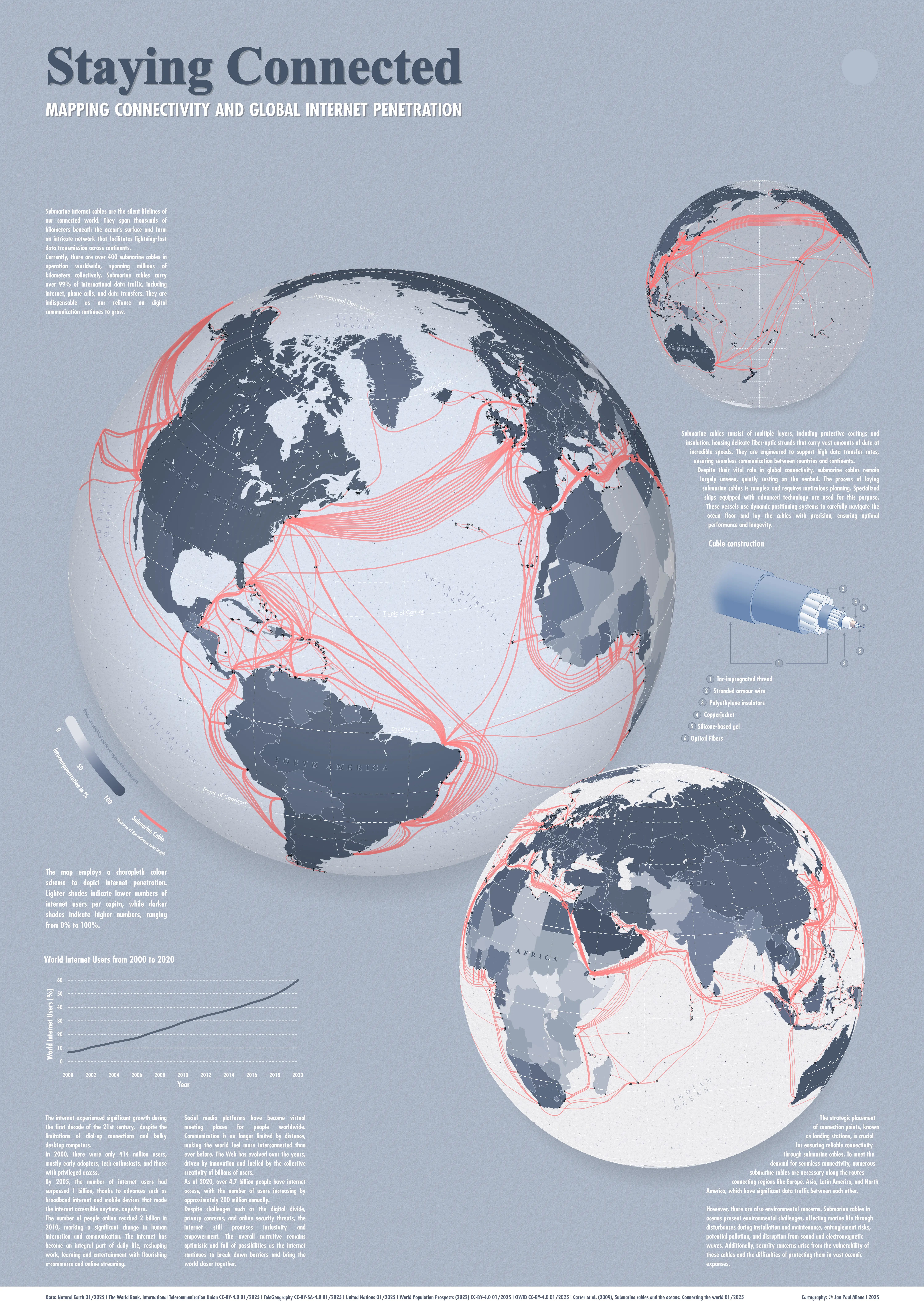
If maps and visualisations fascinate you, this site is the place to be. For example, check out this visualisation of all rocket launches between 1957-2020.
💹 Well Deserved
Last week, Royal Challengers Bengaluru won the Women’s Premier League for the second consecutive season. On the night of the final, captain Smriti Mandhana was majestic. She finished the tournament as the leading run-scorer.
This is a lovely article on how her already-ridiculous career has translated at the endorsement market.
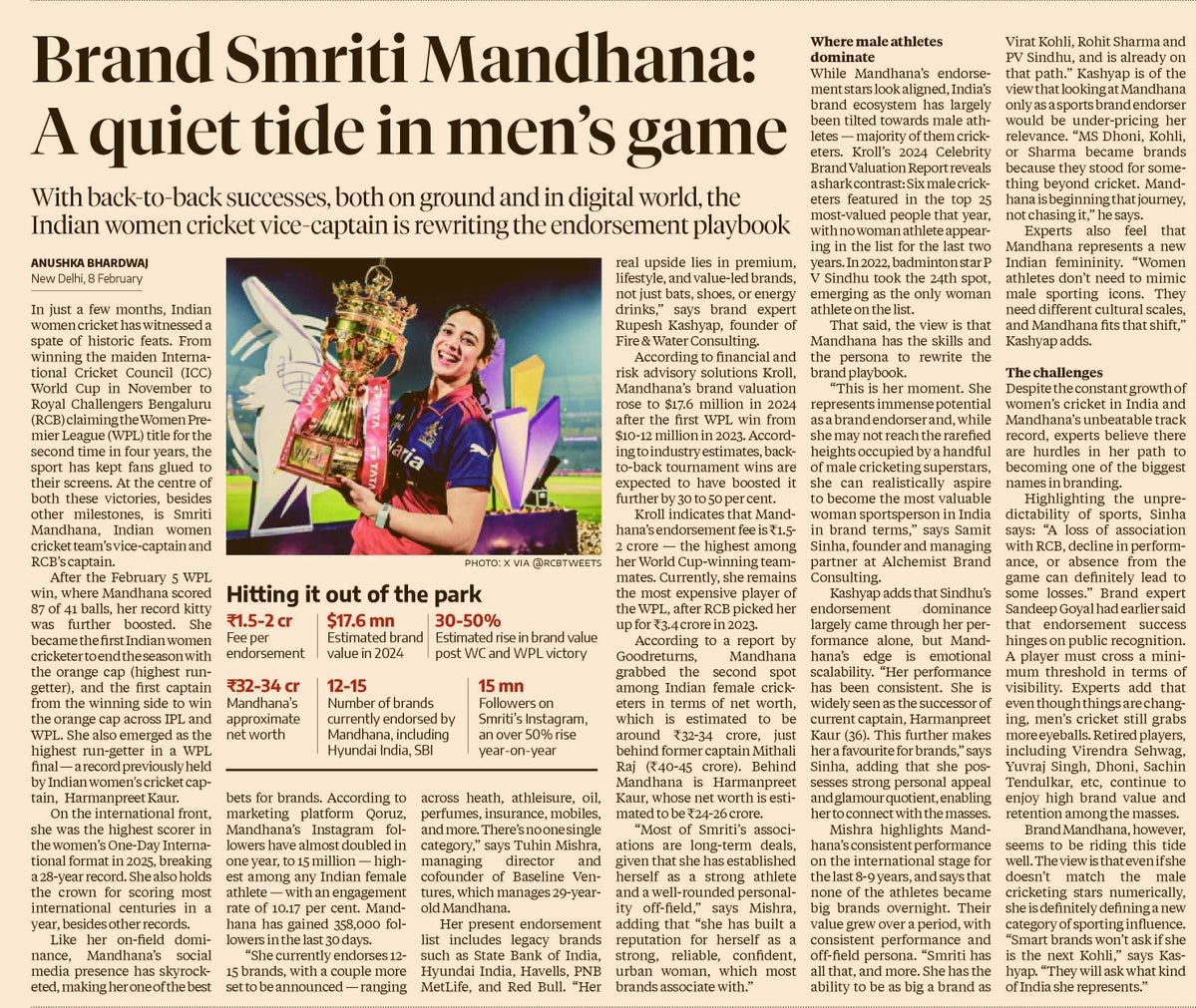
The economic spike was inevitable after Mandhana’s success in the Women’s Premier League and the World Cup win last November. This article is timely also for the contrast it illustrates with what Mandhana and co. get at home.
This week, the BCCI announced the central contracts for both the men’s and women’s teams. And while you see buckets like Grade A and Grade B, like for the men, the fine print here is that the highest grade in the women’s pool is lower than the lowest grade in the men’s pool. In other news, the sun is hot and water is wet.
That’s all from this edition. See you soon!
That last line is too good 😆. And thanks for the map.com link. Rabbit hole, here I come.🐇
From bread to cricket with a dash of AI (Moltbook?) and maps - eclectic jukebox selection indeed. Well written. 😊