

I wanted to quit my first half marathon within twenty minutes. We had just descended from a flyover and turned into the long straight of the Rajiv Gandhi Expressway. I had travelled on this road a few hundred times before, but never at this hour, never on foot. The other side of the divider looked serene—carless, hornless, only the occasional milkman. On this side were us, a slow stream of fluorescent green, moving with a percussive whish-whoosh of running shoes on tar.
My breath was already heavy, my strides uneven. It wasn’t meant to be like this. I had been running medium distance—between 5 and 10 kilometres—for years. A tall, muscular man tapped on my shoulder, saying something to the effect of, “chin up, smaller strides.” It was kind, timely, and the right running advice. The run got easier, but only for a fleeting moment before I looked up and across from the road and saw the Thiruvanmiyur MRTS station, and next to it the left turn towards home. Then it started to hurt.
It was 5:30am on a Sunday morning. My bed was a 15-20 minute light walk away. No one would know if I snuck out. To my friends, I could cherrypick any excuse: wasn’t feeling well, hurt myself, overslept etc etc. I could get myself some nice ginger lemon tea in the morning, watch football later.
At this point, I wish I had an inspirational moment to share. Like, the playlist serving up Europe’s The Final Countdown, and when the intro synths hit, I felt like Sylvester Stallone in a boxing gym. Or some generic Kobe Bryant quote about quitters being losers. Nah. All I got was the milestone board for 5 kilometres. There were sixteen agonising kilometres still ahead of me. But that board gave my video game-conditioned brain a slightly more hopeful signal: 25% completed.
I took out my phone. On the night before, while strategising for the race, I broke the distance into four full passes of Shine On You Crazy Diamond (both tracks), with two-minute walks to recuperate in between. Give or take another 5-10 minutes for exhaustion, and I’d still finish within my 2:15 target.
So, huffing and panting, I gave myself one more pass of Shine On. If the run went south, I’d take the next left home. If not, I would be halfway through the race anyway.
Thing is, I kept tricking myself to find an excuse to stay on track because I had trained bloody hard for this race. I hadn’t missed a day of strength or cardio in weeks. I played intense five-a-side football twice a week. In the week leading up, I had abstained from kebabs and chocolates.1 Part of me didn’t want all of that to result to an abandoned race. That would suck.
I then ran the best half hour lap of my life. It wasn’t all that quick; I stuck to my race pace of ~10kmph. But my form, breath, energy levels were exactly where I had wanted them to be. Heart rate was at a nice 140ish. The sky wasn’t dark anymore, but a faint shade of white with little specks of orange. The easy chill of dawn was mixing with sweat to form a balm on the body. And, by the final saxophone solo of the song, I had crossed the 10km milestone.
The rest of the race was not nearly as floaty. It was painful and exhausting, often making me question the life decisions I had taken to end up here, miserable on a weekend morning. But the progress bar kept moving rightwards, so I clung on.
The medal collection booth was inside a resort on the East Coast Road. Next to it, heaving bodies laid strewn across a lawn like breathless grasshoppers. I found myself a spot and sat down. And this sensation of great relief and pride washed over me. Relief because I didn’t have to run again for many hours and days, or maybe ever; pride because I had emerged on the other side of something I didn’t think I was capable of.2 At different points of later runs—most memorably, through a forest incline in Yercaud—remembering that small stretch between the Kasturbha Nagar and Thiruvanmiyur stations helped me push through.
Why am I telling you all this? Because, lately, many have questioned whether that was me posing for camera or truly feeling those feelings. I mean, not me specifically, but people.
This past week, our Twitter and Instagram timelines have been flooded with pictures from Hyrox Bengaluru. I read through a lot of captions, to get a sense of the people attending this monstrosity of a fitness event. Many were first timers, many others pushed for personal bests. Some finished it all alone, some with partners. And, without exception, the expression on their faces at the finishing arc was pure joy and gratification. That beaming smile, with or without a phone camera staring at you, is a 24-carat organic emotion.
Am I happy for them? God, no. I am jealous. For the uninitiated, let me quickly run you through Hyrox’s format. Hyrox is a “hybrid” race, broken up as eight repetitions of 1 km runs and a workout station.
The first workout station is the SkiErg, where you pull two cables for 1000 metres. Then you run a kilometre and walk into the sled push—shoving a weighted sled across a synthetic floor for fifty metres. Another kilometre of running, followed by the sled pull. Another kilometre of running. Then eighty metres of burpee broad jumps—the most diabolical exercise known to humanity, the result of a cocaine addict finishing a push up and saying, “this ain’t enough, brev.” Another kilometre of running, if your legs are still working, that is. Then comes the rowing machine where you have to pull one kilometre. If done well, this is your recovery station. One kilometre of running. Then you lift two kettlebells, 24kgs each, and walk for two hundred metres. You place them down and join the runners for yet another kilometre. By this time, start evaluating your life insurance payouts. Because, awaiting you, at the end of this run, are sandbag lunges. Lunges toast your quadriceps anyway. Imagine lunging with weights after your quads are basically thin strips of lactic acid. Anyhow, endure you will. Beyond the lunges is another kilometre of turf. The final station is called wall balls—appropriately named, a hundred repetitions of squatting with a medicine ball and hurling it at a target a metre or so above your head.

Over the last couple of days, since the conclusion of the event, there’s been a tangential discourse about Hyrox. Some have called it a performative event, done only for Instagram dope.
Firstly, WHO THE FUCK ENDURES THIS FOR INSTAGRAM, MAN?
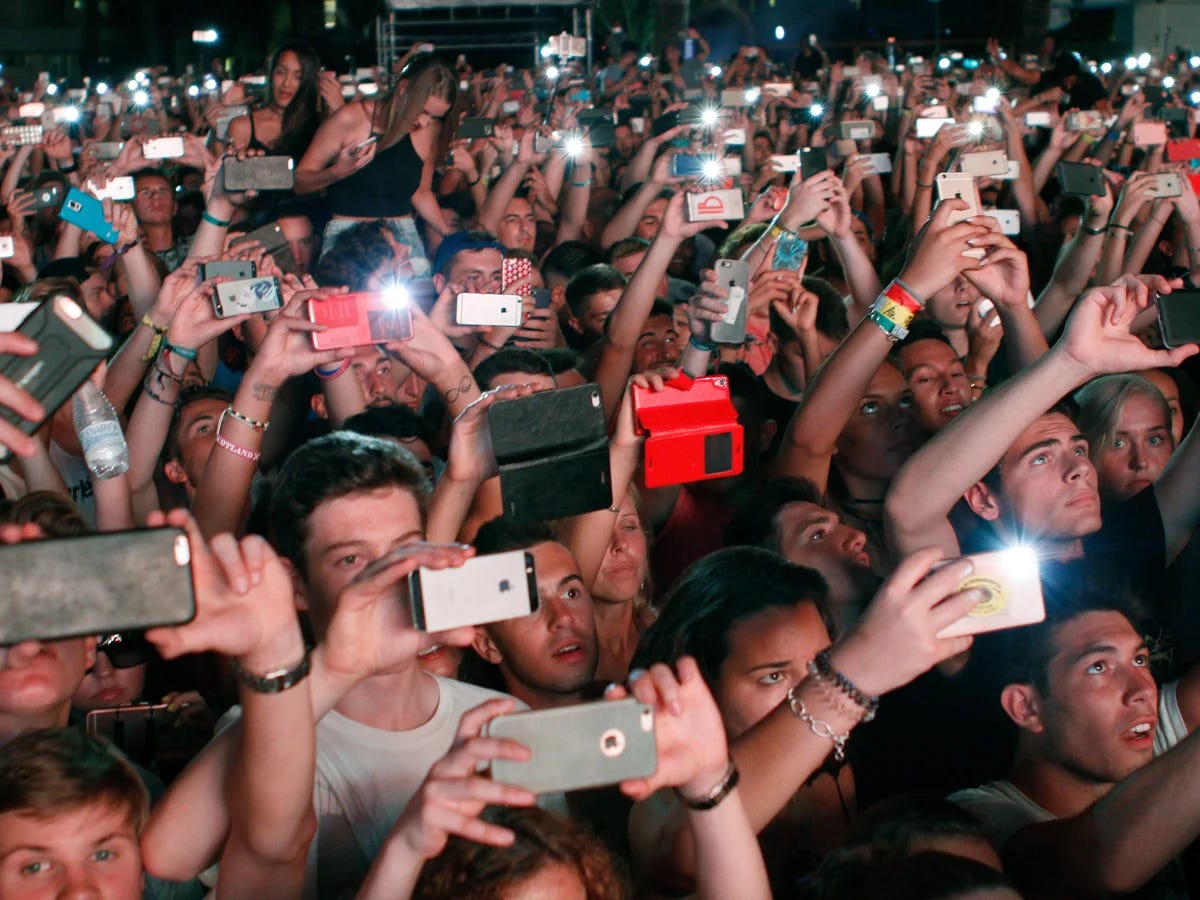
Okay, deep breath taken, let’s dig. What is performative behaviour? A loose definition would be to perform something for external validation. Yes? For instance, attending a concert with your camera out, just to show people you were there, instead of losing yourself to the music. A truly pathetic way to live, but hey, it’s apparently popular.3
Similarly, AI art is performative because there is no rigour of studying the subject you’re claiming to own. You just want an artist’s tag without the work. An authoritarian head of state claiming to be pro-women when his party used the bill as a fig leaf on a more harmful bill? Performative.
But, book clubs and fitness events are... a good thing? Because—and I say this without partaking in either—even if you’re doing it for the serotonin hit of social validation, there is a net positive impact on your life. Reading and fitness will never be harmful. Sure, if you aren’t careful, you might end up reading self-help nonsense and vomiting your bile on LinkedIn, but you’re still sitting through a full book! Maybe, one day, you’ll choose Amitava Kumar over Ankur Warikoo.
Yesterday, I saw pictures of a lady, clearly fifty-plus, who battled anxiety and social stigma to show up for Hyrox. She reached the finish line running. Someone did those burpees while bound to a wheelchair. There were middle-aged cancer survivors and septuagenarians at the podium. A friend, who now owns two Hyrox medals, has been training at a specialised gym for the last year.
The landing page of Hyrox says it’s for everyone. It is good copy. Truth is—getting to the starting lines of these events takes months of work. That path goes through long-term fitness and nutrition discipline. Rare are the nacho-munchers who can just wake up and nail a long run.4
And boy, does India need some good habits. According to the 2024 WHO Physical Activity Factsheet for India, nearly half of the adult population (49.4%) is physically inactive, failing to meet the global recommended levels of at least 150 minutes of moderate-intensity physical activity or 75 minutes of vigorous activity per week. Nearly 50% of at-home protein intake in India is derived from cereals, such as rice and wheat. These grains are considered low-quality protein sources due to their incomplete amino acid profiles and poor digestibility.5
A population that moves too little and eats too little of what it should desperately requires fitness to be packaged as fashionable.
The bandwagon effect is a psychological pattern where people do something simply because others are doing so, often driven by the desire to conform. How often do we do this, with food, travel, and movies? Hell, I watched Gangs of Wasseypur after everyone around me started raving about it. Goa’s entire tourism industry today is funded by the bandwagon effect triggered by Dil Chahta Hai.
Not all of it ends well, of course. I recently ate at a popular pizza place and needed palette cleansers after. Hyrox, too, has its critics, amongst them some learned fitness coaches. But the critique is about the intensity of the exercises, not the idea of the event itself. Most, if not all, will egg you on to develop the strength and then give it a proper shot. Screw abs, the post-run sweat is what it’s about, they all say.
At the half marathon in Chennai, all those years back, someone with a prosthetic leg crossed me. And, I’ll admit, I’m a horrible person and it was a bit of an ego-blow, but it was also truly, very inspiring. I wondered how much he must’ve trained to even get here. I tried finding him after the race for a high-five, but to no avail. Maybe this was his first such run too, maybe not. But, we both had wrecked our Sunday morning to chase a stupid, enormous feeling.
The hardest sacrifice of them all.
You must’ve heard of the term “Runner’s high.” David Linden, Ph.D., a professor of neuroscience at the Johns Hopkins University School of Medicine, calls it “a short-lasting, deeply euphoric state following intense exercise.” The feeling is usually attributed to a surge of endorphins.
But, endorphins, according to Dr. Linden, don’t break the blood-brain barrier. “That relaxed post-run feeling may instead be due to endocannabinoids — biochemical substances similar to cannabis but naturally produced by the body.”
“Yes, I run for natural cannabis.” - Haruki Murakami.
I might end up losing friends for this remark.
Don’t try this at home.
Super relatable piece! And solid perspective. If only they hadn't called themselves "Hybrid Rockstar"...
Excellent. I am doubly inspired to get back to trekking - Fingers crossed 🤞.