

It was noon in Delhi and sunup in Glasgow. Gurindervir Singh, fresh off a dreamlike spring, was preparing for his first round at the Commonwealth Games. A few months earlier, at Ranchi, he had broken the national record for 100 metres twice in 24 hours. He had run in a jet black vest with his name and number on a bib. Here, he was wearing a brilliant blue, with INDIA emblazoned on his chest, and wavy lines running across the fabric like current through a wire.
Murali Sreeshankar was perhaps at the breakfast table, his qualification event a few hours after Gurindervir’s. His singlet was pastel coloured, without lines or patterns, but blue nonetheless. Blue also was Sachin Siwach’s vest, lined like Gurindervir’s, a JSW sticker on the right chest and the India emblem on his left. His bout was late in the day.
Around all this, at 1:05 pm India time, Hockey India uploaded an 84-second video onto their social media channels. The video starts with a title slate, some text in bold orange font, which transitions out to CGI spotlights angling at a grey placeholder shirt. The grey turns saffron, and a tile appears to its right with the subtext: “Symbolises courage, sacrifice & victory. Inspired by the Indian national flag and the rising sun, it reflects new beginnings.”
New beginnings is an interesting phrase to use here, because this is neither a change of direction nor the crossing of a milestone, but a repaint. Indian hockey teams had worn different combinations of blue and white for more than a hundred years, through their six consecutive Olympic golds between 1928 and 1956, three World Cup medals, the crushing drought between 1984 and 2016, up to the consecutive bronze medals at Tokyo and Paris.
Hockey, in fact, gives us the earliest documented record of an Indian team wearing blue. Historian Diljit Singh Bahra recounts here that in 1925, at the founding of the Indian Hockey Federation, the colours were settled as blue shirts with white sleeves and the Star of India on the chest pocket.
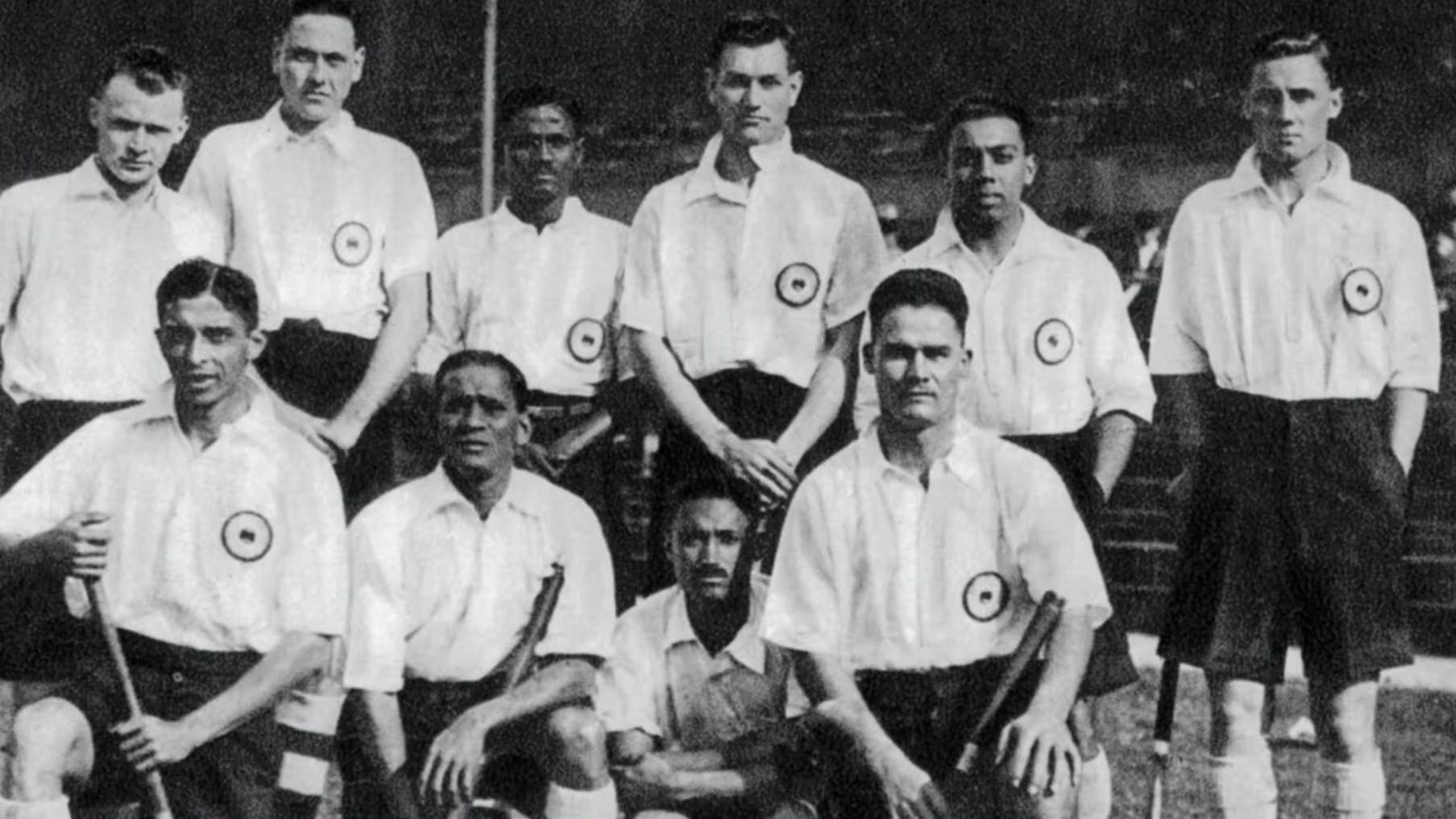
Cricket followed soon. On June 25, 1932, when Col. CK Nayudu and his troops walked out at Lord’s for India’s first ever Test match, they wore white flannels with dark-blue caps bearing the Star of India.
Independent India’s first flag, the only one we’ve used thus far, had a navy blue Ashoka Chakra in the middle of the three horizontal stripes, giving us a blue we could call our own. And with every game, every tournament, the blue accumulated meaning and history, becoming a symbol unto itself.
Every Indian athlete, whatever their discipline, pines to wear blue. For them, the national blue is no less than a ceremonial badge, conferring onto them the status of being one amongst a chosen few, worthy of wearing the colour all the greats before them have.
For the fan, this jersey is a continuation of the Indian sporting story, the marker of movement and evolution. It’s the colour that binds Dhyan Chand and KD Jadhav to Gurindervir, Sreeshankar, and Vaibhav Sooryavanshi.
**
A jersey is a complex creation. An artist first designs its visual character—the lines, the patterns, the artwork; then comes the distribution of secondary and sometimes tertiary colours on collars and sleeves; then the crest and the sponsor stickers; then names and numbers; then easter egg inscriptions underneath the collar or on the hem of a sleeve. The whole exercise is repeated every year—for national teams every second or third—so that the team may have a new look. The only constant amidst all of this, year after year, decade after decade, is the primary colour. Manchester United wear red, Brazil wear yellow, India wear blue.
“It’s like a three-year-old learning A, B, C,” Swaroop Swaminathan tells me. “The colour is the first thing you learn about a team.”
Joey D’Urso, author of the wonderful book More Than A Shirt, has been watching Aston Villa for thirty years now. He tells me about a claret-and-blue blanket, knitted by his grandmother from when he was a child, that he still keeps. “Teddy bears, scarfs, replica shirts—there are all sorts from my childhood,” he says. “So much of football is incomprehensible to a four, five, six year old—the history, players etc. Colours are something extremely simple. Even if someone doesn’t really follow football at all, they’ll know Manchester United wear red. The colour of a team is just the most fundamental thing.”
Colour, in fact, is a key encoding property for memory. Francis Galton was the first to study our tendency to attach colour to memory, all the way back in 1880. A century later, this study at the Max-Planck Institute tested colour’s ability to aid recognition.
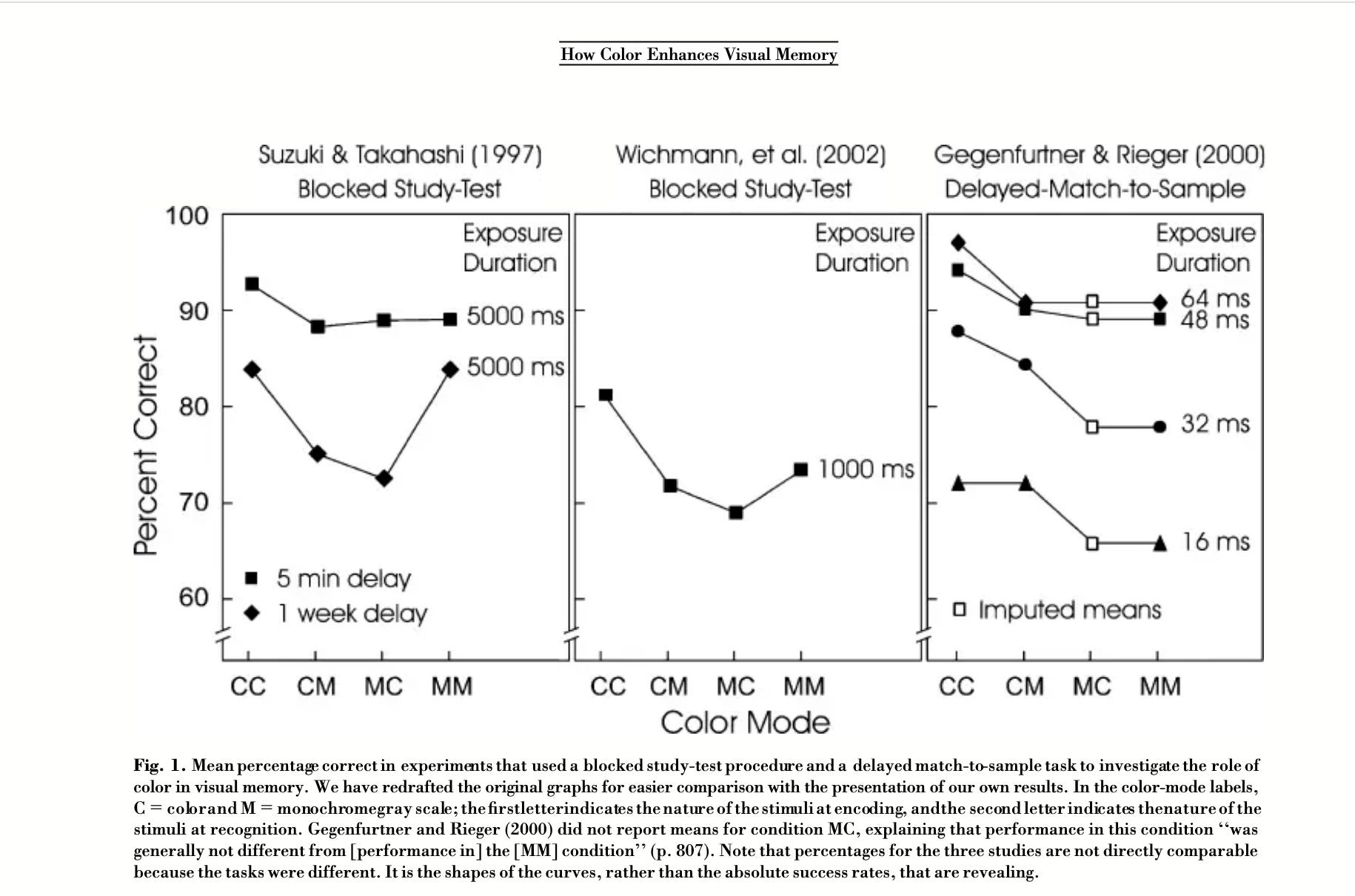
Then there is the aspect of colour triggering associated memory, which Mary Whiton Calkins first studied about in 1896.
Ruhin Chatterjee, an advertising strategist, says, “Colour turns to memory through association and frequency. When a brand shows up in your life wearing the same colours over and over again, your brain rewards their consistency with a memory structure tied back to the brand.”
Sporting colours are the same, except that the association is accumulated not through advertising alone but through years of victories, defeats, joy and heartbreak.
**
Blue can mean very different things, depending on who you ask. For one generation, it triggers memories of Gavaskar’s cap and Ajit Pal Singh’s shirt; for mine, Tendulkar, curly-haired and baby-faced pomp, cutting the yellow-wearing behemoths from down south to size; for another, maybe MS Dhoni’s six that confirmed India’s ascendance and supremacy at the turn of the decade. Hopefully, today’s teenagers see the bright gemstone blue of recent kits and think of Harmanpreet Kaur’s catch and Sunil Chhetri’s goals before remembering the deafening silence of November 19, 2023.
Beneath all this shared history is the foundation of strong private memories. One of mine is of a match I watched on the television, on an evening that went from normal to celebratory—the famous Tendulkar innings at Sharjah, the first one. I was seven and some months, Tendulkar had become Tendulkar, and cricket couldn’t get any more thrilling than a night of sixes and sandstorms. I remember vividly the audacity of the innings, the disbelief around me and in Tony Greig’s voice, as Tendulkar unfurled shot after shot to take India from certain defeat to qualification for the final to the possibility of an outright victory.
The final, two days later, we watched with family and friends. We got an encore. I have a decent recall of jerseys and general sporting equipment, but even so, India’s jersey in that tournament stood out, because they wore multiple shades of blue: a light blue shirt and navy blue trousers. Nobody else was merging shades, and the navy blue looked amazing. There was something electric and futuristic about it, compared to the dull projection of the sky blue.
That love for navy blue has stayed with me. I was too young to have watched the 1992 World Cup, but many years later, when the Men’s World Cup returned to Australia and ICC released replica kits, I ordered my copy.

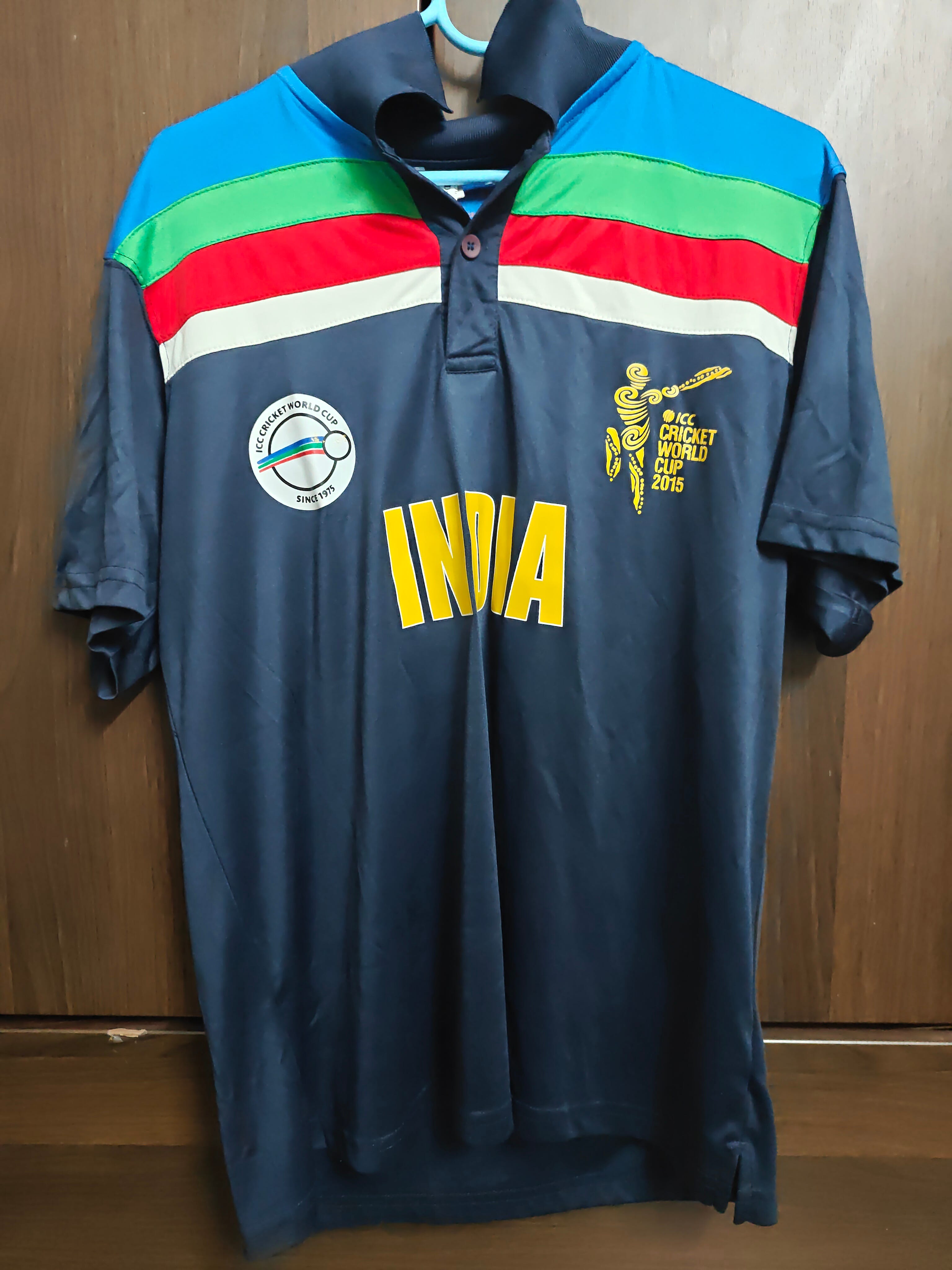
For a brief spell in the middle, India adopted a jersey of a similar shade. It was a period of many great wins and one heartbreaking loss. Tendulkar, wearing that navy blue, smoked Australia for 175 runs within three hours in soul-sapping Hyderabad heat. He got out with 30 left to get—or something similar—and India crumbled. This was a match in 2009 running off a script from 1999.
“Jerseys are markers of time,” Ahmer Naqvi tells me. “The first World Cup I saw was ‘92, where Pakistan won wearing the iconic fluorescent green. And I grew up loving that colour. In the ‘96 World Cup, we wore the dark green, and then lost to India in Bangalore. So, ever since, I’ve not been a huge fan of dark green.”
**
I have a ritual whenever I watch Indian play live. I like to reach the stadium about an hour before the start—no earlier—and then walk a couple of hundred metres to the gates. The crowd starts a little thin, but eventually thickens into a coagulated mass of blue moving towards the halogen lights. And in that crowd one finds a great range of interactions. Children yank their parents towards the hawker painting India flags on cheeks and arms; young men crouch to shuffle through hats and counterfeit jerseys; the hardcore fans come fully prepared, not needing the hawkers here for they’re already wearing their retros or store-bought replicas.
On the Jawaharlal Nehru Marg in Central Delhi, as you turn right into a narrow lane ending at the Ferozeshah Kotla Stadium, you will be sandwiched between a Virat 18 and a Rohit 45; at the Victoria Hostel Road in Chennai, you’ll inevitably bump into a Dhoni 7, that grand old name and number embossed on the latest designs.
Inside, the stadium fills slowly, lines flowing in like tributaries to a sea, until the individual shirts dissolve and what emerges is a single expanse of colour.
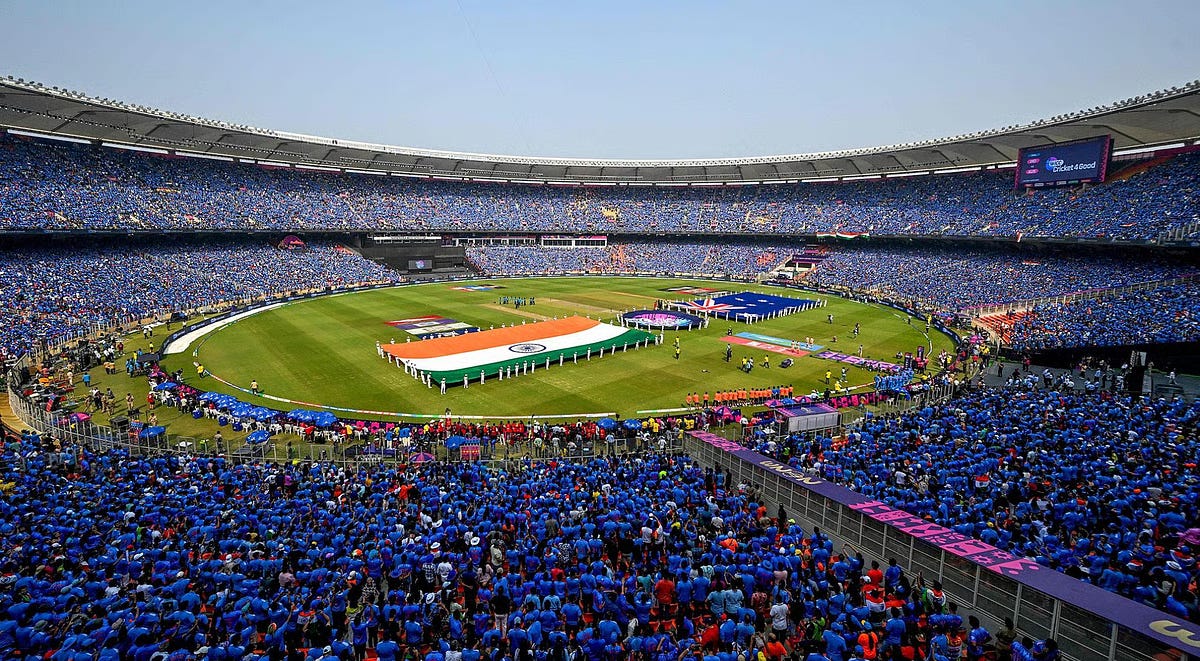
The Dutch understand what it means for a country to become synonymous with a colour. Their orange goes back nearly half a millennia, to their fight for independence. Their royal house is called the House of Orange-Nassau. On April 27 every year, the entire country turns orange to celebrate the birth anniversary of King Willem-Alexander. They travel to international tournaments in thousands, and turn streets and stands into a singing, swaying wave of orange.
**
It’s funny how colours come to people: the Dutch orange came from royalty and the India blue, its imperial history. ACF Fiorentina, from Florence, got their famous purple because of a laundry mishap. Brazil got their yellow because they wanted to break free from the national trauma of white.
But the new India orange—saffron, rather—did not come from an arbitrary collision of circumstances. Saffron represents the flag of the Bharatiya Janata Party (BJP)—the majoritarian, hypernationalistic party that has governed India for the past twelve years—and of its spiritual parent, the Rashtriya Swayamsevak Sangh (RSS). Through these twelve years the BJP has tried everything in its power to saffronise and sanskritise Indian institutions.
Sport, with its reach, becomes an obvious canvas. Consider these two recent examples: this year the All India Football Federation filed a proposal to rename itself the Football Federation of Bharat; in 2023, there was a serious attempt to put the cricket team into orange for the World Cup game against Pakistan, at Ahmedabad, in the home patch of the Prime Minister and the Home Minister.
There is no concrete proof, yet, of saffron being pushed onto Indian hockey by someone within BJP, but the symbolism of the colour is beyond doubt. The timing itself was hard to miss—mere weeks before a World Cup, and just two days after a nationwide student protest forced the BJP government to bend for the first time in their tenure and sack the education minister.
Hockey India offered two flimsy explanations: one, the World Cup would be played on blue turf, they said, and blue shirts could make it harder for players to distinguish their teammates; and two, the change had been made only after consultation with the players.
The consultation claim quickly fell apart: the federation’s own president, Dilip Tirkey, admitted that he had learned of the change some four hours before the video went up. The Indian Express, meanwhile, spoke to five people in and around the national teams, and every one of them said that they had not been consulted. The blue jersey-on-blue turf logic doesn’t stand either because India have been wearing blue all this while and not once has a player complained of the turf camouflaging their teammate.
That leaves the faint justification that saffron is, after all, only a colour lifted from the national flag. It does not hold. There are three non-blue colours on the Indian flag, if a change was at all required. The hockey team has worn white before, so it could’ve been chosen as a neutral colour with blue details, like at the Paris Olympics. And let’s face it, no national body will willingly wear green in 2026 India, for the same reason that some will happily wear saffron. In contemporary India, saffron has been made to stand for a particular imagination of the country: Hindu, muscular, majoritarian, insistent upon a singular idea of belonging. The final slate of the jersey announcement video reads: “Ek Bharat, Shreshta Bharat. One India, Supreme India.”
And this is only the jersey at the level of the idea. The more consequential change will take longer to spread and longer still to notice.
Sporting teams adopt new jerseys all the time. Over the last thirty years, Manchester United have worn black, white, blue, even grey away jerseys. David Beckham scored many, many memorable goals wearing those jerseys. But ask a painter to make a Beckham portrait for London’s National Museum, and he will clothe his subject in red.
Had saffron been introduced as India’s away jersey, it would’ve still carried its symbolism but could have potentially become another object in the cupboard. As a primary shirt, it threatens to become the colour palette of the future.
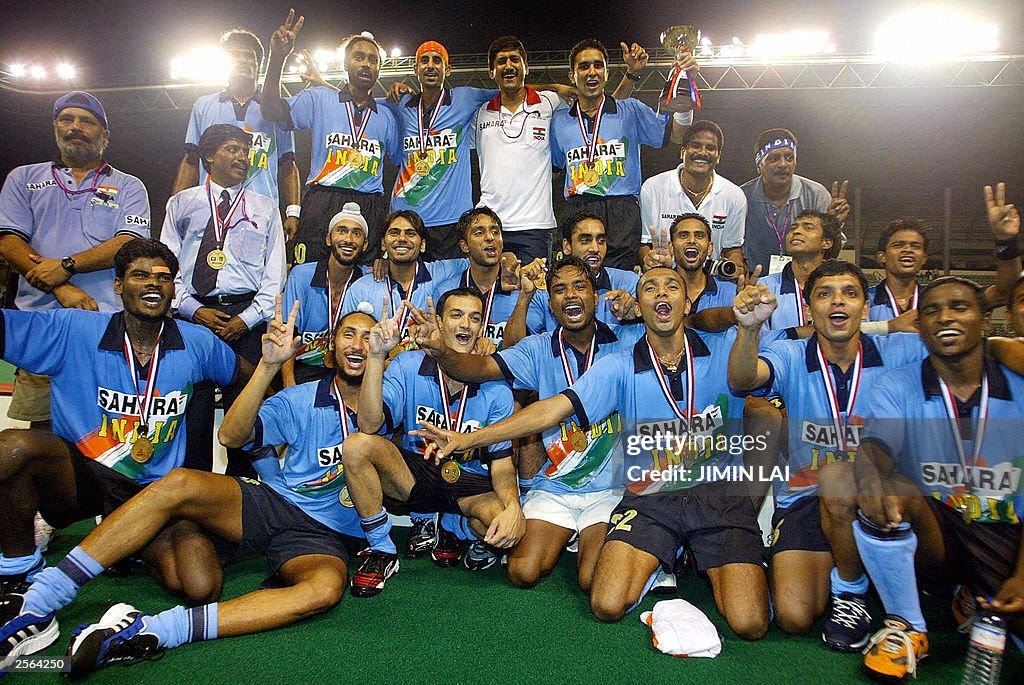
“By changing the colour of a jersey, you’re trying to change memory,” says Swaroop.
One of my favourite sporting memories is watching India play Pakistan at the 2010 Commonwealth Games. The 16000-seater Dhyan Chand Stadium was packed to its brim. Many wore cricket jerseys because Indian sports shops don’t readily stock hockey jerseys. India scored four times in the first half, and each goal was accompanied by the stadium DJ playing a riff from Iron Maiden, Metallica, or Wolfmother’s unforgettable intro from Joker and the Thief. Sometimes, he played Fear of The Dark to cue-in a penalty corner. Over the evening, I must’ve high-fived and hugged at least twenty strangers, all in blue.
Now think of a child at this month’s World Cup, and think of what she takes in. India haven’t won the men’s hockey World Cup since 1971. The women haven’t finished in the top seven since 1978. Harmanpreet Singh and Salima Tete will walk out in orange. If India somehow win a medal, the podium photographs will have a spread of orange. Tournament by tournament, if hockey charms the child enough, she’ll accumulate more memories, more goals, more crushing losses. In four years time, the Commonwealth Games will come to Ahmedabad. And that child will be watching an Indian hockey team—or perhaps many other Indian teams—walk out in orange, surrounded by a sheet of orange, the blue by then relegated to scattered dots.
Years later, when that child is asked what Indian sport looked like when she was falling in love, she’ll see her memories in orange. And her idea of Indian sport will have broken away from the thread that binds it to history.
When a jersey is changed so radically, it does not merely change how a team looks; it changes, entirely, how a team is remembered.
Pretty much par for the course for the majoritarian government to alter memory in more ways than one, they have altered history books, altered science and social science books and nothing is beneath them to even tamper with the colour we fans associate our national team with. Too much nationalism, and while colours do not have a religion, this move smacks of the single minded agenda of “saffronisation”.
The myopic monochromatic vision needs a cataract surgery at the earliest to restore the rainbow to our wonderful nation.