

There is a Bangla word, “golpo”. It does a lot of work. Golpo could mean a chat over tea, a yarn spun up to impress your friends, or it could mean telling someone a story. A mythological epic is a golpo, as is the tale of me batting without a chest guard and coming home black and blue.
Golpo is a big part of growing up in a Bengali household. When I was a child, my grandfather would tell me bedtime stories of Sunil Gavaskar and Sachin Tendulkar playing cricket with Santa Claus. It made perfect sense, because why wouldn’t it? Daadu, as I called him, was often improvising on the go, but I was ready to believe that Santa had found the right length to trouble the two Mumbai stalwarts.
Daadu also introduced me to the written word. He wanted me to learn how to read and write in Bangla, properly. So, every year, during my summer holidays, I had a daily assignment of translating one passage from the Bangla newspaper to English, and vice versa. Naturally, I picked both passages from the backpages. An assignment spent reading about my favourite people never felt like work. Soon, I was seeking out the newspaper while still yawning and crusty-eyed. The English dailies seemed to have a greater spread for sports, and I gravitated towards them. I’d skim through the sports section before leaving for school, and slowly read every word after coming back.
On the sports page, I first read stories about Sachin Tendulkar and Steffi Graf as something beyond their scores. While most columns narrated the previous day’s events, sometimes, I’d find these stories that turned the lens. What did it mean, say, for the batter on the billboards outside my window to lead cricket’s most populous country at the age of 23? What does it mean to carry the ambitions of a nation bursting at the seams to get itself seen?
Soon arrived a magazine called Sportstar, with a glossy cover and a centrefold that I could pluck and paste on my almirah. My first poster was of Shane Warne. Some editions later, I got the subject I was looking for: Tendulkar himself. That edition, I still remember, carried a long, long story about his Bandra childhood, Ramakant Achrekar, Shardarshram Vidyamandir, and that partnership with Vinod Kambli.
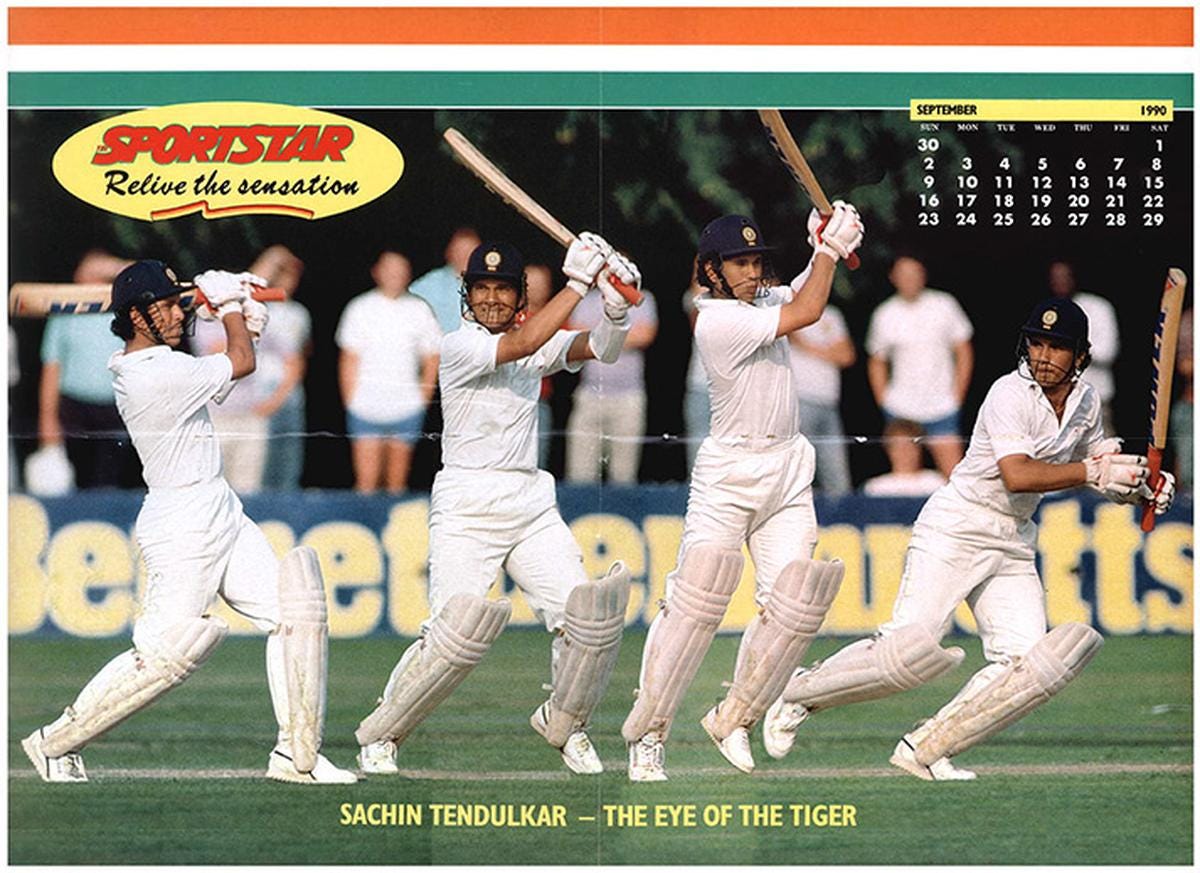
The writer used Tendulkar’s formative years to illustrate both his natural gifts and a love for batting. There was one nugget about how “Achrekar Sir” would drive him from one match to another, all afternoon and evening, so he got proper practice. These stories broadened how I saw the cricketer, and over time, the man.
Some years later, the newsstand in the market started stocking Wisden Cricket Monthly. It was different, more luxurious. The pages felt smoother on my thumb. It cost 25 rupees at the time, a massive bump from the 10 we paid for Sportstar. But WCM was where I could indulge. It had an assorted buffet of longform stories, written by authors I was beginning to appreciate for their craft. I remember, after India’s embarrassing performance at the 2007 Men’s ODI World Cup, Harsha Bhogle’ essay on the excuses of rust and age coming out of that camp, and how you’d never hear such a thing from the Australians, even at their worst. Even the most legendary Australian cricketers, Harsha wrote, carried a work ethic and humility the rest of the world could learn from.
And, to date, my all-time favourite cricket story is a Rahul Bhattacharya classic, Fly Lara Fly. He zooms out from Lara’s epic 153 not out, and slowly builds a portrait of Lara the batter, the captain, the talisman, and the genius. Then he walks you to Barbados for the final flourish.
Is it good memory that keeps these stories alive for me? Hardly. I forget keys, birthdays, the names of people I met yesterday. What I hold on to is a thing made well. Those pieces were built with care, and they used cricket the way a calypsonian uses a chorus: as a way in, not the whole point. Through the game you got people, then places, then the whole wide, unruly world. They were like songs that you hum for what you get to say about life. And good music, like a good story, is timeless.
Which brings me here, The Cordon. It’s our new cricket publication, focussing on deeply-reported stories from all corners of the cricket world.
We’re live!
When Tarutr and I first spoke about a cricket publication, a couple of years back, we kept returning to a kind of storytelling we had loved when we were younger. I remember us speaking about Sharda Ugra’s The Boy Called Boom—as good a profile of a would-be world-beater as you’d find anywhere. There was once an abundance of it, but now, with technology and the demand for immediate “copy”, the stream has thinned. As habitual readers of cultural magazines from the west, our angst lay simply at not having more of this kind, especially within cricket. Too much of cricket coverage, we felt, was tethered to the news cycle, forcing the system into producing regurgitations of the same script.
So, all those coffee meetings later, we’ve built this. We’re insatiably curious about the sport, and the only honest way to follow that curiosity is to ask questions.
Through this publication, we want to bring immersive storytelling to cricket. And, like those essays I spoke about, we want to use cricket as a window to the world: people, places, systems, and structures. With every story, we hope to move one step closer to its subject. We’d like to speak to cricketers, coaches, and analysts to understand the game better; we want to tell you how tens of thousands of fans flock to watch local cricket in a place that does not have an international stadium; there is, also, a story waiting to be written about how a cricket board that was $27 million in debt is now prioritising Test cricket. And, of course, we have 150 years of history: so much to mine from, so many stories to tell.
Can we change cricket media? Maybe. Maybe not. That is neither a question for now, nor does it bother us much. We have tremendous admiration and respect for the writers working within the media system. We just want to tell stories that are relevant in time, and will stay just as readable months or years later.
You are, of course, who we write for. While we believe strongly in choosing the important over the popular, a story is only good if it is well-told. And the only way to know that is through how much you, the reader, are following along. We are believers in the idea that even if a reader isn’t interested in a topic, there’s an elegant way to tell her that story without losing her attention.
We are also aware that this is an age for short-form content, a lot of it AI-assisted. In a recent conversation, the editor-in-chief of a popular publication was bemoaning the amount of effort it takes to produce a good text essay versus its meagre returns in revenue. As I draft this, The Daily Telegraph has undergone a mass layoff, as their owner tries to build an “AI-powered global media business.”
In this weather, does a text-forward, writer-forward publication have much chance? We believe, naively perhaps, that longform, self-written text doesn’t only stand a chance, it can flourish with the right amount of care. This isn’t, just to be clear, a case of swimming against the tide for the thrill of it. We are swimming in waters we trust and are comfortable with. It will be, without doubt, a challenge. But it’s a challenge worth pursuing.
As editors, producing a good story is both our biggest trial and the most fun part of our job. We get to work with uber-talented writers and help shape their stories so that you can glean something from it. We will not always succeed, but we’ll give our best. In the process, your feedback and critique will be invaluable to us, so please, please write to us.
I am sending out this letter alongside our formal launch. Over the last few years, I have been incredibly fortunate to have you as an audience. Whether it be the breathlessness of reporting from two World Cups, or the slow burn of weekly longreads, I have found a community of writers and readers I’m proud to have the ear of. I have also been lucky beyond imagination to receive the generosity of actual legends who have walked this path for decades. People like Prem Panicker and Sharda Ugra did not need to share their time and care, but they have, many times over. And it makes me feel like there’s space to aim higher.
A magazine of mine is, how to say this, a wish I had held for a long time. Since the days of Sporstar, right up to reading FiftyTwo with equal amounts awe and jealousy, I have wanted to do this. It feels quite surreal to say the wish is now real, that there are stories we’re applying finishing touches to. It feels invigorating, because of the kind of stories and writers we’ve been commissioning. I feel, also, a sense of calm, because I sit next to a founder and co-pilot in Tarutr Malhotra who’s equally obsessed with the craft of storytelling. If you dropped into our meetings, you’d think we’re running a nerdshop more than a newsroom. I hope it stays than way.
So, welcome aboard. I hope you like what you find here. Our first story drops on 15th November. It’s lush and absorbing, and it comes from a wonderfully talented writer. I can’t wait to share it with you.
Very best wishes, as always. ❤️