

Mustafizur Rahman is thirty years old. For the last eleven years, he has moulded himself into a shrewd limited-overs bowler. He can make the ball dart and dip, almost at will. He isn’t quite the first name on a fantasy XI sheet, but franchise teams like to have him around.
At the turn of the year, he would have been looking forward to a busy few months: first the T20 World Cup in India, where Bangladesh were due to open against West Indies at Eden Gardens on February 7th; and then the IPL, where Kolkata Knight Riders had signed him for 9.2 crore rupees—the most money ever paid for a Bangladesh cricketer.
On 6th January, the Kolkata Knight Riders released him from their roster.
The orders had come from the Board of Control for Cricket in India (BCCI) a few days prior. The official line referenced the communal violence in Bangladesh and a general deterioration of diplomatic relations. The implied extension was that much of that communal violence had been directed at Bangladesh’s Hindu minority. The BCCI’s largely Hindu audience was angry, and the board bowed to the pressure.
The Bangladesh government retaliated. The Bangladesh Cricket Board (BCB) wrote to the International Cricket Committee (ICC), cricket’s global governing body, demanding that their World Cup matches be moved out of India due to security concerns. The games could be shifted to Sri Lanka or Seychelles for all they cared, just not within India. They even suggested a plausible workaround of swapping fixtures with Ireland and basing themselves in Colombo.
Over a series of conversations, which concluded with a Zoom meeting with directors from all full-member nations, the ICC made it clear that the BCB could either abide by the finalised schedule or withdraw from the tournament.
Bangladesh withdrew. The decision is evidently not popular, neither within their own cricketing ecosystem nor the dressing room. Or, most importantly, the fans. Two ballots of tickets have already been released. Many Bangladeshi fans will have booked their travel and stay.
It was a government call which used cricket as a medium. And now, we have a World Cup where a full-member nation will be absent despite qualifying. There is a chance another team withdraws too. Eye for an eye, and all that.
The whole thing was set into motion when the BCCI decided they didn’t want Mustafizur earning IPL money.
After Mustafizur’s removal, Congress politician Shashi Tharoor raised an important question that best not be posed to the BCCI or of its millions of sycophantic fans on social media: “Would you have taken the same step had the player been Litton Das, a Hindu?”
Kolkata Knight Riders’ owner Shah Rukh Khan was called everything between a spy and a traitor on national television. One party leader offered a cash reward for chopping his tongue. Shah Rukh Khan is a Muslim man in the India of 2026, and this was the kind of manufactured, red-misted rage that knew exactly where to find its outlet.
KKR had merely selected a player from a pool the BCCI itself had approved. If there was a buck to stop anywhere, it stopped at the board that had registered Mustafizur for the auction in the first place. If the BCCI wanted Bangladeshi players out of the IPL, there were quieter ways—still exclusionary, but less insulting.
For more than a decade, the IPL has been barricaded from Pakistani presence. Wasim Akram, Shoaib Akhtar, Salman Butt, Umar Gul, Shahid Afridi and Misbah ul-Haq had been part of the inaugural season in 2008. Shoaib took four wickets one night at the Eden Gardens, defending a small total under lights, and the Kolkata crowd rose to him as if he were one of their own. Shah Rukh lifted him up like a father lifts his child.
All those ties were severed after the 26/11 terror attack and repeated LOC violations. Bangladesh, however, was a completely different, way more benign situation. The decision to remove Mustafizur was a flex, intended to appease their most vocal constituency.
On paper, the BCCI hasn’t done anything unlawful. The IPL is a private party, and the BCCI gets to decide who to invite. Similarly, they were perfectly willing to host Bangladesh. It was Bangladesh’s decision to demand alternatives.
But context matters. Last year, when the BCCI wanted India’s matches moved out of Pakistan for the Champions Trophy, the ICC agreed. It remains the only time the ICC approved such a request. Every other team in World Cup history—including those facing genuine security threats after bombings—has been told to forfeit or leave.
The difference is leverage, and the BCCI knows how to use it. When you generate a small nation’s GDP worth of revenue for the sport, few have the will to ask uncomfortable questions—about fairness, consistency, or whose interests the board actually serves.
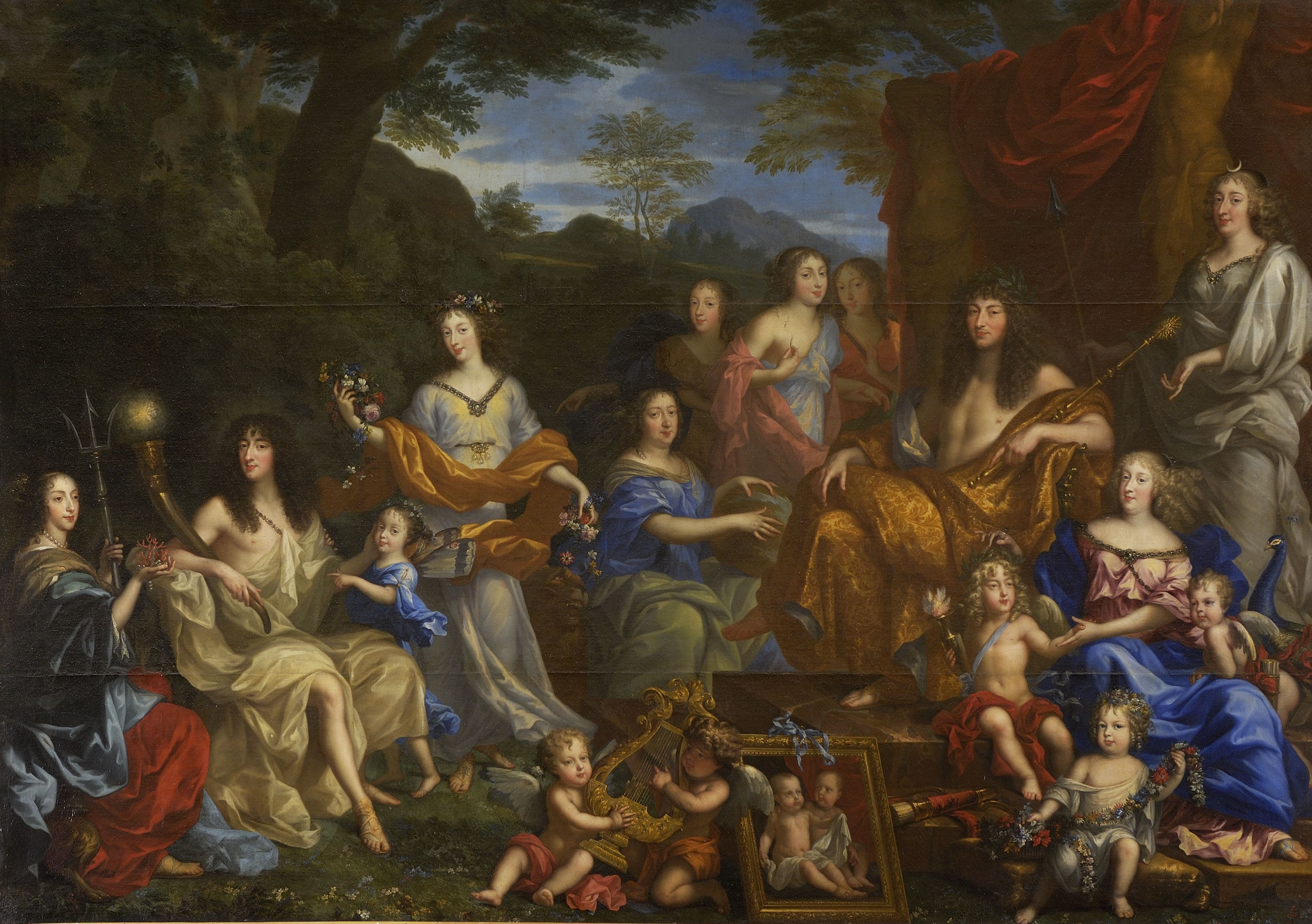
Axing a player and explicitly citing communal tension, while granting asylum to an ex-Prime Minister, places India in a ring across Bangladesh. Similarly, the prolonged “snubbing” of Pakistan has gone far past cricket or diplomacy, instead speaking the presiding government’s language.
When a cricket board is helmed by the son of a sitting home minister, when the coach of the national men’s team is an ex-party member, the veil separating a sporting body from the state machine dissolves into thin air. Indian cricket, for decades a carrier of India’s pluralism and diversity, now has a religious and political identity card. Worryingly, it’s very proud to flash it every chance it gets.
The ones suffering here are the Bangladesh cricketers. Mustafizur most visibly, made a symbol for decisions that had nothing to do with him. A Bangladesh team that had been coming together nicely, built around the Under-19 World Cup winners from 2020, will now watch a major tournament from home. It is a strange loneliness, to be cast out of a game you’ve played for decades, by neighbours who once championed your arrival.
There was a time when the subcontinent spoke as one about cricket; when India, Pakistan, and Sri Lanka locked arms and formed a committee with an acronym. When the world doubted whether this sport could belong here, they answered together. That was thirty years ago, almost to the day.
On 31st January 1996, a suicide bomber detonated 400 pounds of explosives inside the Central Bank compound in Colombo. The blast killed 91 people and injured nearly 1500. The opening ceremony of the 1996 ODI World Cup—jointly hosted by India, Pakistan, and Sri Lanka—was less than two weeks away.
Australia and several other teams threatened to boycott their Sri Lanka matches. The island was in the middle of a civil war anyway, and the bombing had draped Colombo in a cloud of ash. So India and Pakistan did something that would be unimaginable today: they formed a joint team, flew to Colombo, and played a match against Sri Lanka. At the press conference, Mohammed Azharuddin and Wasim Akram—India and Pakistan captains—spoke like old friends: “This proves to the world we’re all together.”
Mike Marqusee wrote a book about that World Cup called War Minus the Shooting. He saw the tournament for what it was: a hinge point, a moment when the balance of power in cricket was beginning to shift.
“All three countries were opening their economies and following the well-worn International Monetary Fund (IMF)-charted path of privatisation, deregulation, cuts in public spending and encouragement of foreign investors. All three were building consumer subcultures in the midst of mass poverty. All three were racked with ethnic intolerance, and in all three the question of national identity was hotly contested.”
The 1996 World Cup went ahead. The £8 million sponsorship deal with ITC was the biggest single investment in a sporting event in subcontinental history. Australia and West Indies did not travel to Sri Lanka and forfeited their matches; Sri Lanka beat Australia in the World Cup final.
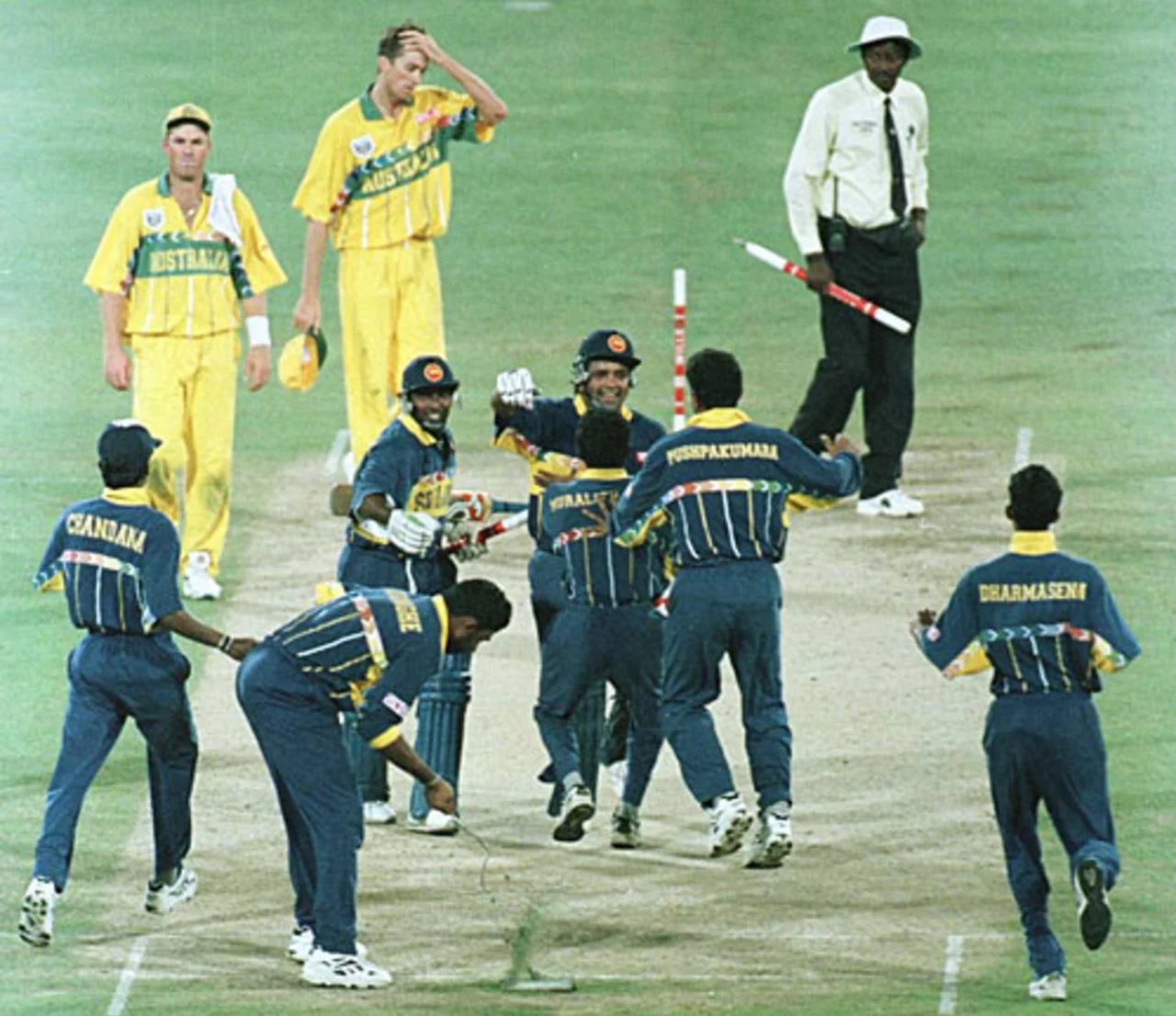
Organised and started as a subcontinental feast, the tournament soon became an exhibition of Indian cuisine. It was loud, it was bright, it was dramatic—everything the old guardians of cricket had feared and everything the new audiences craved. Even the cynics were forced to admit that this was the future of the sport.
Sri Lanka was a small island nation emerging from the debris of a bloody civil war. Pakistan lost its hold on cricket with 9/11 and the hotel bombings of 2002. India, young and vast and economically restless, was waiting to grab the baton.
On its way up, Indian cricket was keen to make friends.
In 1999, after almost a decade of cancelled tours, India invited Pakistan over for a full spring. Three Test matches, an ODI series, the whole thing. Political parties were incensed. Shiv Sena workers dug up the pitch at Delhi’s Ferozeshah Kotla Stadium prior to the first Test match. The game was moved to Chennai, with Delhi now getting the next Test. At Chennai, after an emotionally sapping loss, the crowd stood up as one to applaud Wasim Akram’s team. When India toured Pakistan in 2004, they were received like long-lost family.
In the middle of all this, Bangladesh made their Test debut against India in Dhaka. Jagmohan Dalmiya’s BCCI had played a crucial role in lobbying for Bangladesh to be elevated within the ICC and get full Test status. The ICC Champions Trophy was designed to take cricket to newer territories. Its first edition went to Dhaka, the next to Nairobi. The idea was that the game should grow, that it should belong to everyone.
The world was different then. Sporting fraternity was once a foundational pillar of Indian and subcontinental cricket, or at least the oft-quoted rhetoric. The subcontinent itself is now fragmented; cricket even more so.
The Champions Trophy found its way back to the major nations. World Cups have been completely rearranged to maximise big-ticket games from the big markets. By the way, only one of those markets gets to watch all the big games on weekends. Cricket’s revenue is not shared equally anymore. The big dogs are given the biggest chunks, and the small dogs are asked to be grateful for scraps.
West Indies, once the pride of post-colonial cricket, barely get enough money now to maintain their stadiums and training facilities. Their best players frequently refuse central contracts and instead spend their time hopping between franchise leagues. New Zealand cricketers sign conditional contracts these days, lest international cricket come in the way of franchise commitments.
Meanwhile, IPL franchises own satellite teams in South Africa, USA, Dubai, England, and soon, Australia.
This week Manchester Originals, a franchise in The Hundred, was rebranded as the Manchester SuperGiants by their new Indian owners. The unveiling ceremony featured a logo of a galloping elephant with a phoenix on its back—the elephant, obviously, being the animal most associated with Greater Manchester. Todd Greenberg, chief of Cricket Australia, confessed that Australia are on the brink of opening their doors to private investment.
Everyone in power behaves the same way eventually. There was a time when a different set of men owned the world and believed they floated above the rules that governed everyone else. The accents were different then, but the conduct was the same. Today the balance has shifted, and power belongs to those who control the market. The armies have expanded too; now they include anyone willing to defend your honour on Twitter, anyone who can be marshalled into outrage or violence at the tap of a screen. Those armies eventually make a significant chunk of the consumer market that decides the outcome of sales meetings.
The economists tell us that challenging entrenched power requires first acknowledging its existence. Cricket hasn’t managed that. I am not sure it wants to.
What it has managed is a kind of homogenous tribalism. The BCCI speaks the government’s language—of majoritarian muscle and the market as moral authority. Bangladesh, in response, reaches for the vocabulary of national pride. At another time, the BCCI asks its players to “snub” Pakistan; the Pakistan Cricket Board chief, also serving within the Pakistani government, runs away with the Asia Cup trophy.
In time, politicisation and one-upmanship turn malignant, infecting the whole tree. The trunk hollows out, and the branches snap in the first strong wind. Bangladesh were not unsafe in Kolkata; they withdrew because staying would’ve meant kneeling.
On February 7th, West Indies will take the field at the Eden Gardens. Scotland, the sudden beneficiaries of Bangladesh’s absence, will walk alongside them. The Saturday afternoon crowd will fill the stands. And soon enough, a commentator’s voice will cut through the images, telling us about the magic of World Cup cricket, the way it brings nations together.
Mustafizur Rahman will be in Dhaka, instead of where he should’ve been. He hasn’t said anything publicly. There is, perhaps, nothing to say. The game will go on without him.
Cricket is losing a fan in me with all this drama.
Some extra context: the bcci's communique to kkr would have been informed by the upcoming Bengal election. Politics would have dictated that in order to win the state from the TMC, polarising people would be the first step. One easy way to do that would be to rile up Bangladesh.
In turn, Bangladesh had to save face given that its own election is fast approaching. So they too stuck to their guns.
I would say, this is not about the market at all. Had there been no elections on either side of the border, the fizz would have been here with his team!